top of page

Insights

Short. Precise. Effective.

In a competitive landscape, consistency isn't a luxury; it's the bedrock of scalable success. While to-do lists manage daily tasks, Standard Operating Procedures (SOPs) standardize excellence, ensuring critical processes are performed correctly and safely, every single time. This systematic approach is what separates high-growth companies from those that remain stagnant, bogged down by preventable mistakes and inefficiencies.


SOPs eliminate guesswork, reduce errors, and empower your team to operate with confidence and precision. They are the essential blueprints for everything from complex CRM workflows and logistics tracking to routine equipment maintenance and outbound calling campaigns. For project managers, operations teams, and business owners alike, well-designed SOPs are the key to unlocking true operational control and automation.


But where do you start? This guide moves beyond theory to provide eight comprehensive standard operating procedure examples from diverse industries. We will not just show you what they look like; we will break down their structure, analyze their strategic value, and offer actionable takeaways you can implement immediately. By the end, you'll have a clear framework and tangible inspiration to transform your own operations from chaotic to controlled.


1. Equipment Maintenance and Calibration SOP


An Equipment Maintenance and Calibration SOP is a crucial document that provides a systematic process for ensuring all tools and machinery function correctly and within specified tolerances. This type of standard operating procedure is vital in industries where precision is non-negotiable, such as in pharmaceutical manufacturing for maintaining HPLC systems or in hospitals for calibrating MRI machines. Its primary goal is to prevent equipment failure, ensure data integrity, and maintain operational consistency, which directly impacts product quality and safety.


Strategic Breakdown


This SOP moves equipment care from a reactive "fix-it-when-it-breaks" model to a proactive, scheduled approach. It mandates regular checks, cleaning, servicing, and calibration, all documented meticulously. This process is heavily influenced by quality management systems like ISO 9001 and regulations like the FDA's Good Manufacturing Practices, making it a cornerstone of compliance and operational excellence. By standardizing maintenance, companies minimize costly downtime and extend the lifespan of valuable assets.


Actionable Takeaways


  • Implement a Digital System: Use a Computerized Maintenance Management System (CMMS) to automate scheduling, track service history, and manage spare parts inventory.

  • Cross-Train Your Team: Ensure multiple staff members are trained on critical maintenance procedures to avoid single points of failure.

  • Document Everything: Record every maintenance activity, deviation, and corrective action. This log is essential for audits and for identifying recurring equipment issues.

  • Optimize Scheduling: For more advanced strategies, you can learn more about how to master equipment maintenance scheduling for maximum uptime.


The following decision tree illustrates a simplified logic for determining when calibration is necessary, helping teams make consistent and timely maintenance choices.
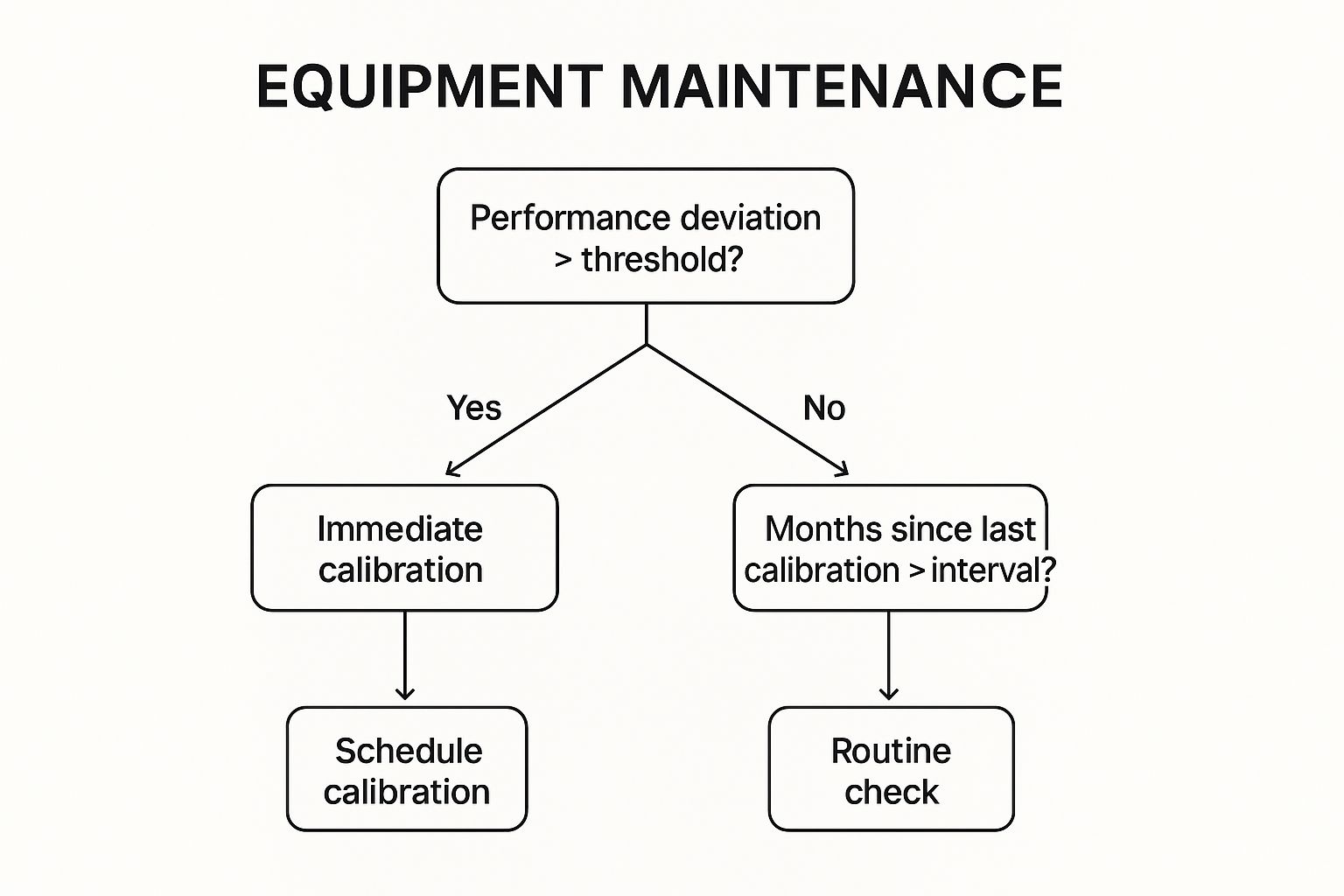


This visual guide shows that calibration can be triggered by either a performance issue or a scheduled interval, ensuring multiple safeguards are in place.


2. Customer Service Response Protocol SOP


A Customer Service Response Protocol SOP is a comprehensive framework that standardizes how customer inquiries, complaints, and requests are handled across all communication channels. This type of standard operating procedure is essential for companies aiming to deliver consistent, high-quality support, such as Zappos with its legendary customer service program or Amazon with its customer-centric support protocols. Its primary goal is to define response timeframes, escalation paths, and communication standards to ensure every customer interaction reinforces brand trust and satisfaction.



Strategic Breakdown


This SOP transforms customer service from a chaotic, ad-hoc function into a predictable, scalable system. It establishes clear rules for everything from the initial greeting to post-resolution follow-up, empowering agents to act decisively. Influenced by the "customer obsession" philosophy popularized by figures like Jeff Bezos, this approach uses tools like ServiceNow or Salesforce to create a single source of truth for every customer interaction. By standardizing responses and escalations, businesses can dramatically improve key metrics like First Contact Resolution (FCR) and Customer Satisfaction (CSAT).


Actionable Takeaways


  • Implement a Tiered Support System: Structure your team into tiers (e.g., Tier 1 for general inquiries, Tier 2 for technical issues) to ensure problems are routed to the most qualified agent efficiently.

  • Create Response Templates: Develop a library of pre-approved response templates for common questions and issues. This speeds up response times while ensuring brand voice consistency.

  • Establish Clear Escalation Triggers: Define specific conditions that trigger an escalation, such as unresolved issues after a set time or requests from high-value clients, to prevent customer frustration.

  • Use CRM to Track History: Leverage a Customer Relationship Management (CRM) system to log all interactions. This gives agents full context for every conversation, leading to more personalized and effective support.


3. Data Backup and Recovery SOP


A Data Backup and Recovery SOP is a critical IT procedure that establishes systematic processes for backing up organizational data, testing backup integrity, and executing recovery steps in case of data loss. This type of standard operating procedure is essential for business continuity, protecting against threats like hardware failure, cyberattacks, and natural disasters. It's a foundational document for any organization that handles valuable information, from financial institutions protecting transaction data to healthcare organizations safeguarding patient records.



Strategic Breakdown


This SOP transforms data protection from a hopeful afterthought into a defined, repeatable, and testable business function. It formalizes schedules, retention policies, and recovery protocols, ensuring that data can be restored quickly and reliably, minimizing downtime and potential revenue loss. The procedure is often built around established frameworks like the 3-2-1 rule (three copies, two different media, one off-site) and is a core component of compliance with regulations like GDPR and HIPAA. By standardizing these actions, companies build resilience and demonstrate due diligence in protecting their digital assets.


Actionable Takeaways


  • Follow the 3-2-1 Rule: Maintain at least three copies of your data, store them on two different types of media (e.g., local disk and cloud), and keep one copy off-site.

  • Test Your Backups Regularly: A backup is only useful if it can be restored. Schedule and perform regular recovery tests to validate backup integrity and practice the restoration process.

  • Automate and Monitor: Use automated backup solutions with built-in monitoring and alerting. This ensures backups run on schedule and immediately notifies the IT team of any failures.

  • Document Recovery Steps: Clearly outline the step-by-step procedure for data recovery. This documentation is invaluable during a high-stress incident and is crucial when handling complex processes like database restoration, which you can read about in this guide to data migration best practices for a seamless transition.


4. Employee Onboarding and Training SOP


An Employee Onboarding and Training SOP is a formalized document that outlines a consistent, repeatable process for integrating new hires into an organization. This procedure guides a new team member's journey from their pre-boarding activities through full productivity, covering orientation, role-specific training, and cultural immersion. It is essential in any industry for ensuring new employees feel welcomed, prepared, and aligned with company goals, such as in tech companies like Salesforce using its Trailhead platform for structured learning or in healthcare systems standardizing clinical training. Its main objective is to reduce ramp-up time, improve employee retention, and maintain a consistent company culture.


Strategic Breakdown


This SOP transforms onboarding from a simple administrative checklist into a strategic talent development initiative. It mandates a structured experience that includes pre-boarding communication, a comprehensive first-week plan, and scheduled checkpoints to monitor progress. This approach, championed by organizations like the Society for Human Resource Management (SHRM), shifts the focus from merely completing paperwork to purposefully engaging and equipping new talent. By standardizing this process, companies can ensure every new hire receives the same high-quality introduction to their role and the company's values, directly impacting long-term performance and loyalty.


Actionable Takeaways


  • Start Before Day One: Implement a pre-boarding process where you send a welcome kit, share team introductions, and provide access to necessary documents to build excitement and reduce first-day anxiety.

  • Assign an Onboarding Buddy: Pair each new hire with an experienced team member who can answer informal questions and help them navigate the company culture, separate from their direct manager.

  • Structure Training Modules: Break down complex job functions into smaller, digestible training modules delivered over several weeks. Use learning platforms to track completion and assess comprehension.

  • Create a Feedback Loop: Schedule regular check-ins at the 30, 60, and 90-day marks to gather feedback from the new hire about the onboarding process, allowing for continuous improvement.


5. Laboratory Sample Testing and Analysis SOP


A Laboratory Sample Testing and Analysis SOP is a rigorous scientific procedure that standardizes how samples are received, processed, tested, and reported. This type of SOP is foundational in settings where accuracy and reproducibility are paramount, such as clinical laboratories processing patient samples or environmental agencies analyzing water quality. The primary goal is to ensure the integrity of the analytical process from start to finish, maintaining a clear chain of custody and guaranteeing that results are reliable and defensible.


Strategic Breakdown


This standard operating procedure example transitions laboratory work from an individual-dependent art to a system-driven science. It mandates strict protocols for every step, including sample acceptance criteria, preparation methods, instrument operation, and data reporting. Heavily guided by standards like ISO/IEC 17025 and regulations such as the FDA's Good Laboratory Practices (GLP), this SOP is a non-negotiable component of quality assurance. By standardizing these complex workflows, labs minimize human error, prevent cross-contamination, and ensure that test results can be confidently reproduced and audited.


Actionable Takeaways


  • Implement a LIMS: Use a Laboratory Information Management System (LIMS) to automate sample tracking, manage test queues, and securely store results, reducing manual documentation errors.

  • Conduct Proficiency Testing: Regularly participate in external proficiency testing programs to validate your methods and benchmark your lab's performance against industry standards.

  • Maintain Detailed Records: Document every action, from sample receipt to the final report. This includes instrument logs, calibration records, and any deviations from the procedure.

  • Establish Critical Value Protocols: Create clear, immediate communication protocols for reporting results that fall outside of normal ranges and could indicate a critical issue.


6. Financial Transaction Processing SOP


A Financial Transaction Processing SOP is a comprehensive procedure that governs how financial transactions are initiated, authorized, processed, and recorded. This type of standard operating procedure establishes critical controls, approval hierarchies, and audit trails to ensure accuracy, prevent fraud, and maintain financial integrity. It is essential for organizations of all sizes, from corporations managing accounts payable workflows to investment firms handling securities transactions, as it forms the backbone of financial accountability and regulatory compliance.


Strategic Breakdown


This SOP transitions financial management from an ad-hoc, risky activity to a structured, auditable process. It standardizes every step, from initial request to final reconciliation, ensuring that no single individual has unchecked control over a transaction. This segregation of duties is a core principle influenced by frameworks like the Sarbanes-Oxley Act (SOX) and the COSO framework. By defining clear roles and requiring specific documentation for approvals and verifications, the SOP creates a transparent system that safeguards assets and builds trust with stakeholders, auditors, and regulatory bodies.


Actionable Takeaways


  • Automate with Financial Software: Implement robust financial management systems like SAP or Oracle to automate workflows, enforce approval hierarchies, and create immutable audit logs.

  • Conduct Regular Audits: Routinely test transaction controls and perform internal audits to identify vulnerabilities before they can be exploited.

  • Maintain Clear Documentation: Insist on meticulous record-keeping for every transaction, including invoices, purchase orders, and approval signatures. This documentation is your primary defense during an audit.

  • Train for Fraud Prevention: Provide ongoing training to staff on recognizing common fraud schemes, phishing attempts, and social engineering tactics that target financial processes.


7. Safety Incident Response and Investigation SOP


A Safety Incident Response and Investigation SOP is a critical procedure that outlines the immediate actions, investigation methods, and corrective measures after a safety incident, accident, or near-miss. This type of standard operating procedure is essential for organizations committed to protecting their workforce and meeting regulatory standards, such as a construction company responding to a fall or a chemical facility managing an exposure event. Its primary purpose is to ensure employee well-being, facilitate transparent reporting, and prevent future occurrences by systematically analyzing root causes.


Strategic Breakdown


This SOP shifts the organizational mindset from reactive damage control to proactive, systematic improvement. It establishes clear, step-by-step protocols for everything from immediate first aid and securing the scene to conducting a thorough, blame-free investigation. Influenced heavily by frameworks from OSHA and NIOSH, this procedure is foundational to a robust safety management system. By standardizing the response, companies can ensure regulatory compliance, reduce liability, and foster a culture where safety is a shared responsibility. This process is also a key component of a larger risk management strategy; when preparing for unexpected disruptions, a comprehensive business continuity plan template can provide a broader framework for organizational resilience.


Actionable Takeaways


  • Establish a Blame-Free Reporting Culture: Encourage employees to report all incidents and near-misses without fear of reprisal, as this data is vital for identifying hidden risks.

  • Use Standardized Forms: Implement consistent digital or physical forms for incident reports and root cause analysis (like the "5 Whys" method) to ensure all necessary data is captured.

  • Train Designated Responders: Ensure specific team members are trained in first aid, incident scene management, and investigation protocols to lead an effective and orderly response.

  • Communicate Lessons Learned: Actively share findings and corrective actions from investigations across all relevant departments to prevent similar incidents from happening elsewhere.


8. Document Control and Management SOP


A Document Control and Management SOP establishes the systematic process for how all organizational documents are created, reviewed, approved, distributed, and archived. This type of standard operating procedure is fundamental for industries where information integrity is paramount, such as in ISO-certified companies managing quality manuals or legal firms handling sensitive case files. Its primary goal is to ensure document accuracy, enforce version control, and maintain compliance, thereby protecting information and supporting consistent business operations.


Strategic Breakdown


This SOP transforms document handling from a chaotic, ad-hoc activity into a structured, secure lifecycle management process. It defines clear rules for who can create, modify, and approve documents, preventing unauthorized changes and ensuring a single source of truth. Popularized by frameworks like ISO 9001 and enabled by platforms like SharePoint, this procedure is a cornerstone of quality management and information governance. By standardizing document control, companies mitigate compliance risks, improve audit readiness, and enhance operational efficiency.


Actionable Takeaways


  • Establish Clear Naming Conventions: Implement a standardized file naming system (e.g., ) to make documents easily searchable and identifiable.

  • Automate Workflows: Use an electronic document management system (EDMS) to automate the review and approval process, sending notifications to stakeholders and tracking progress.

  • Provide Role-Based Training: Ensure all employees are trained on their specific responsibilities within the document lifecycle, from creation to secure disposal.

  • Audit Regularly: Periodically review document access logs and version histories to ensure compliance and identify potential security gaps. For more in-depth strategies, explore these 9 document management best practices for 2025.


8 SOP Examples Comparison Guide


SOP Title

Implementation Complexity 🔄

Resource Requirements ⚡

Expected Outcomes 📊

Ideal Use Cases 💡

Key Advantages ⭐

Equipment Maintenance and Calibration SOP

Moderate to High: specialized technical knowledge needed

High: time, technical staff, possible vendor support

Reduced equipment downtime; measurement accuracy; compliance

Pharma, healthcare, manufacturing, labs

Extends equipment life; ensures reliability; cost-saving over time

Customer Service Response Protocol SOP

Moderate: requires training and updates

Moderate: CRM systems, trained staff

Consistent, timely customer interactions; higher satisfaction

Retail, e-commerce, hospitality

Faster resolution; improved retention; accountability

Data Backup and Recovery SOP

High: complex IT setup and monitoring

High: infrastructure, software, security

Minimized data loss; business continuity; regulatory compliance

Financial, healthcare, government, e-commerce

Quick recovery; protects against cyber threats; peace of mind

Employee Onboarding and Training SOP

Moderate: extensive program development

Moderate to High: trainers, materials, platforms

Reduced turnover; faster productivity; consistent training

All industries with significant staffing needs

Improved engagement; accountability; structured learning

Laboratory Sample Testing and Analysis SOP

High: rigorous protocols and training

High: lab equipment, specialized staff

Reliable, reproducible results; regulatory compliance

Clinical, environmental, food safety, pharma labs

Traceability; reduces errors; quality control

Financial Transaction Processing SOP

Moderate to High: multi-level controls

Moderate: software and trained personnel

Fraud prevention; accurate records; regulatory compliance

Banks, corporations, investment firms, government agencies

Clear audit trails; streamlined but controlled process

Safety Incident Response and Investigation SOP

Moderate to High: training, documentation

Moderate: training, investigation resources

Reduced injuries; legal compliance; improved safety culture

Manufacturing, construction, chemical, healthcare

Systematic analysis; liability protection; culture building

Document Control and Management SOP

Moderate: workflow and change management

Moderate: document management systems

Document accuracy; version control; regulatory compliance

ISO-certified companies, pharma, legal, government agencies

Consistency; audit trails; improved info sharing


From Examples to Execution: Your Next Steps


We've explored eight diverse standard operating procedure examples, moving from the technical precision of equipment calibration to the critical human element of employee onboarding. Each example, whether for data recovery or customer service, illustrates a universal truth: structured processes are the bedrock of operational excellence and sustainable growth.


The power of these documents lies not in rigid, unchangeable rules, but in their ability to provide a clear, repeatable framework. A well-crafted SOP is a strategic tool that transforms tribal knowledge into a shared, accessible company asset. It empowers your team with the autonomy to act confidently, knowing they are following a tested and approved method.


Distilling Strategy from Structure


Across all the examples, from financial processing to safety incident response, several core principles emerged. These are the strategic takeaways you can apply directly to your own procedure development.


  • Clarity Over Complexity: The best SOPs use simple language, visual aids like flowcharts, and a logical step-by-step structure. The goal is immediate comprehension, not academic thoroughness.

  • Defined Roles and Responsibilities: Ambiguity is the enemy of efficiency. Every effective SOP clearly states who is responsible for what at each stage of the process.

  • Embedded Checks and Balances: Notice how the data backup SOP included verification steps and the financial SOP required approvals. Building in these checkpoints is crucial for quality control and risk mitigation.

  • A Foundation for Automation: A clearly documented procedure is the first step toward powerful automation. You cannot automate a chaotic or undefined workflow; an SOP provides the necessary blueprint for tools like Zapier, Make.com, or custom CRM workflows.


Your Action Plan for Implementation


Viewing these standard operating procedure examples should be a catalyst for action, not just a source of information. The transition from theory to practice is where the real value is unlocked. Don't let the scope of a full operational overhaul intimidate you; progress begins with a single, well-defined step.


Here is a simple, actionable path forward:


  1. Identify a High-Impact Process: Start by targeting one recurring bottleneck or area of frequent error in your business. Is it your sales outreach, client onboarding, or project management workflow?

  2. Draft a "Version 1.0" SOP: Don't aim for perfection. Create a simple, one-page document outlining the essential steps. Focus on making it 80% right and getting it into the hands of your team quickly.

  3. Gather Feedback and Iterate: The initial draft is a starting point. Ask the employees who perform the task for their input. What steps are missing? What could be clearer? Refine the document based on real-world use.

  4. Embrace Automation: Once the process is stable and documented, explore opportunities for automation. Can you use a tool like GoHighLevel or n8n to handle repetitive communication, data entry, or task assignments?


Mastering the art of creating and implementing SOPs moves your business from reactive problem-solving to proactive, strategic execution. It builds a resilient, scalable operation where consistency and quality are not accidental but engineered by design.


Ready to transform your documented procedures into powerful, automated workflows? At Flow Genius, we specialize in turning your SOPs into seamless, efficient systems that run on their own, freeing up your team to focus on what matters most. Schedule a discovery call with Flow Genius today and let's build your operational playbook together.
At its heart, the change management process isn't just a series of steps on a checklist. It's a structured approach to guide people—not just projects—from where they are today to where they need to be tomorrow. It's the human side of implementing change, ensuring that individuals, teams, and the entire company are prepared, supported, and equipped to embrace what's new.


Understanding the Change Management Process


Think of it like a captain navigating a ship through a storm. A good captain doesn't just grip the wheel and hope for the best. They communicate a clear destination, make sure every crew member understands their role, and build the confidence needed to get through the rough seas. Change management works the same way; it's less about the technical plan and more about supporting the people who have to live with the results.


This people-first mindset is critical. Why? Because even the most brilliant new strategy or system will fall flat if the people who need to use it don't get on board. The simple truth is that change is hard, and our natural instinct is to resist anything that disrupts our routine. A formal process brings much-needed order to the often-messy human side of change.


The Three Pillars of Change Management


While there are many specific models and frameworks out there, almost every successful change initiative rests on three core pillars. These phases provide the fundamental structure for moving from initial idea to lasting results.


This table breaks down the journey into its essential parts.


Pillar

Objective

Key Activities

Preparing for Change

Build a solid foundation by assessing readiness and defining the strategy.

Develop the business case, secure leadership sponsorship, identify stakeholders.

Managing the Transition

Guide people through the implementation and empower them for success.

Communicate plans, provide training, offer coaching, and manage resistance.

Reinforcing New Ways

Ensure the change becomes the new normal and doesn't fade away.

Collect feedback, measure results, correct gaps, and celebrate wins.


These pillars aren't just theoretical; they provide a logical roadmap that helps you anticipate and navigate the inevitable bumps along the way.


A structured approach is non-negotiable because it addresses the most common points of failure: lack of communication, insufficient leadership support, and employee resistance. By anticipating these challenges, organizations can proactively manage them.

Unfortunately, getting this right is tough. Research shows that only about 34% of implemented change initiatives succeed globally. That means a staggering two-thirds fail to achieve their original goals, which really underscores how complex it is to prepare, support, and help people through a transition.


To see how these principles apply in a more technical environment, you can explore specific IT change management processes that are designed to keep systems running smoothly. A solid structure like this is what minimizes resistance, prevents productivity from plummeting, and ultimately makes a change successful for the long haul.


The Core Stages of Change: A Step-by-Step Walkthrough


Knowing the high-level pillars—preparing, managing, and reinforcing—is like having a map of the country. Now, it's time to zoom in on the specific roads that get you from point A to point B. These stages are where the rubber meets the road, turning a big idea into a practical, step-by-step journey for your entire organization.


Think of it like building a house. You don't just show up with a hammer and start swinging. You start with a detailed blueprint (the preparation), pour a solid foundation (the plan), build the frame (the implementation), and then add all the finishing touches that make it a place people want to live in (the reinforcement). Each stage builds on the last, creating a stable and lasting result.


Stage 1: Define and Prepare for the Change


Before you take a single step, you have to know exactly where you're going and, more importantly, why you're going there. This first stage is all about building a rock-solid business case. Without a compelling "why," any change effort is dead in the water, doomed to face confusion and resistance right from the start.


To get this right, leaders need to nail down the answers to a few critical questions:


  • What problem are we actually solving? Get specific about the pain points or the opportunities that make this change necessary.

  • What does a "win" look like? Define clear, measurable outcomes that will tell you without a doubt that the change worked.

  • Who is this going to affect? Map out every stakeholder, from entire departments down to individual roles, to understand the ripple effects.

  • What happens if we do nothing? Create a real sense of urgency by showing the risks of sticking with the status quo.


This is also the time to get a realistic read on your organization's readiness for change and, crucially, secure visible and active sponsorship from leadership. A leader's buy-in isn't just a box to check; it’s the signal everyone else looks for to know this is a real priority.


Stage 2: Develop a Robust Management Plan


Once the "why" is crystal clear, it’s time to draw the map. This stage is all about creating a detailed, actionable plan that addresses not just the technical side of the project, but the human side of the transition.


A huge piece of this is the communication plan. This is your script for how, when, and what you’ll communicate to different groups throughout the entire process. Consistent, honest communication is the best antidote for the fear and uncertainty that fuel resistance. If you need a solid framework to get started, using a free project communication plan template can ensure you don't miss any critical steps.


"Overlooking the need to communicate and bring employees along for a meaningful change journey is a classic misstep. Leaders often focus on executing the change itself, but without clear and empathetic communication, even the best-planned initiatives will stumble."

But communication is just one part. A complete plan also needs to cover:


  • Sponsorship: A clear playbook for how leaders will actively champion the change.

  • Training: A schedule and curriculum to give people the new skills they need to succeed.

  • Resistance Management: A proactive strategy for anticipating objections and addressing them head-on.


Stage 3: Implement the Change and Empower Employees


This is go-time. The plans are activated, and the change officially rolls out—whether that means a new software system goes live, a team gets restructured, or a new process is introduced. The focus here shifts from planning to empowering.


Training sessions kick off, support channels like help desks or coaching are made available, and leaders start actively modeling the new behaviors they expect to see. This is also where your resistance management plan gets put to the test. Managers and change champions need to be on the ground, listening to feedback, addressing concerns with empathy, and proving the value of the new way of working.


It’s a common mistake to see "go-live" as the finish line. It’s not. It's the beginning of the adoption curve, and the early bumps and wins provide priceless data for what comes next.


Stage 4: Reinforce and Sustain the Change


Just because a change has been launched doesn't mean it will stick. People are creatures of habit, and without a deliberate effort, they will naturally slide back into old, comfortable routines. This final stage is all about making the new way of working the new normal.


The goal is to weave the change into the very fabric of your organization's culture. Key activities here include:


  1. Collect and Analyze Feedback: Actively seek out what’s working and what’s not from the people on the front lines.

  2. Diagnose Gaps and Manage Resistance: Pinpoint where adoption is slow and figure out the root cause.

  3. Implement Corrective Actions: This might mean more training, a few tweaks to the new process, or a targeted communication push.

  4. Celebrate Successes: Publicly recognize and reward the teams and individuals who are embracing the change. This builds powerful positive momentum.


By constantly measuring your progress against the success metrics you defined back in Stage 1, you prove the value of the initiative and lock it in for the long haul. This cycle of feedback and improvement is what turns a one-off project into a true, lasting evolution.


Exploring Popular Change Management Models


Knowing the basic stages of change is like having a map, but a proven model is the GPS that gives you turn-by-turn directions. These frameworks are structured, repeatable methods that have been tested and refined in the real world. Instead of starting from scratch, you can lean on them to handle the tricky parts of organizational and human behavior.


Think of it like this: anyone can follow a recipe's basic steps (mix flour, add eggs), but a master chef has a specific technique that gets a perfect result every time. Change management models are those master techniques. They give you a deeper insight into how people actually process a transition, so you can tailor your plan for the best possible outcome.


Prosci's ADKAR Model: The Individual's Journey


One of the most popular and effective frameworks is the ADKAR model from Prosci. What makes ADKAR so powerful is its intense focus on the individual. It’s built on a simple truth: an organization doesn’t change until the people within it do.


The model breaks this personal journey down into five sequential building blocks. Each one has to be in place before you can move to the next.


The ADKAR acronym stands for:


  • Awareness: Do people get why this change is happening? This is the logical first step.

  • Desire: Are people personally motivated to get on board? This is the classic "What's in it for me?" question.

  • Knowledge: Do people know how to change? This is all about training and education on the new way of doing things.

  • Ability: Can people actually put that knowledge into practice? This is where training turns into real-world performance.

  • Reinforcement: What systems are in place to make sure the change sticks? This includes everything from feedback and recognition to celebrating wins.


ADKAR is a fantastic diagnostic tool when a change initiative stalls. If people aren't using a new software (Ability), is it because they weren't trained (Knowledge), or is it because they never really wanted to in the first place (Desire)? The model helps you pinpoint the exact barrier and address it.


Kotter's 8-Step Process: Mobilizing the Organization


While ADKAR zooms in on the individual, John Kotter's 8-Step Process pans out to give you a top-down roadmap for leading huge, company-wide change. It’s less about individual psychology and more about creating an unstoppable wave of momentum driven by leadership.


Kotter's model is a sequence of steps that build on each other to get an entire organization moving in the same direction.


  1. Create Urgency: Light a fire under people. Make the need for change feel immediate and real.

  2. Form a Powerful Coalition: You can't do it alone. Assemble a team of influential leaders to champion the cause.

  3. Create a Vision for Change: Paint a clear, compelling picture of the future state.

  4. Communicate the Vision: Share that vision over and over, through every channel you have.

  5. Remove Obstacles: Find and get rid of the barriers—be it old systems or resistant managers—that are slowing you down.

  6. Create Short-Term Wins: Nothing builds momentum like success. Plan for some visible, early victories.

  7. Build on the Change: Don't declare victory too early. Use the momentum from early wins to tackle even bigger changes.

  8. Anchor the Changes in Corporate Culture: Weave the new ways of working into the very fabric of the company's DNA.


This model is a go-to for massive transformations like a merger, a major restructuring, or a complete shift in business strategy where you need strong, unified leadership from the top.


Choosing the Right Model for Your Needs


So, which one is better? It’s the wrong question. Neither model is inherently superior; they just have different jobs. In fact, they often work brilliantly together. ADKAR gives you the granular, people-first approach for individual adoption, while Kotter provides the high-level, strategic framework for mobilizing the entire organization.


The real secret is to view these models as flexible toolkits, not rigid rulebooks. The best change leaders I know often mix and match elements from different models to fit their specific situation.

To help you decide where to start, here’s a quick comparison of the two.


ADKAR vs. Kotter's 8-Step Model: A Comparison


This table breaks down the key differences between these two foundational models, highlighting where each one shines.


Aspect

ADKAR Model

Kotter's 8-Step Model

Focus

Bottom-up, concentrating on the individual employee's journey through change.

Top-down, focusing on leadership's role in driving organizational-level change.

Approach

A diagnostic tool to manage and troubleshoot personal transitions.

A strategic process for creating momentum and guiding large-scale initiatives.

Best Use

Perfect for technology adoption, new process rollouts, and team-level changes.

Ideal for mergers, cultural transformations, and company-wide restructuring.


Ultimately, having these models in your back pocket gives you a serious strategic advantage. It helps you move past simple project management and into the realm of truly leading people through a successful, lasting transformation.


By picking the right approach—or blending them—you can turn resistance into active engagement and ensure your initiative is one of the 34% that actually succeeds.


Why Leadership Is the Ultimate Change Catalyst


You can have the best change management models and processes in the world, but they’re just ink on paper without the right people pushing them forward. When you get right down to it, the single most critical factor in any change initiative is active and visible leadership. Leadership is the engine that powers the entire effort, turning a theoretical plan into something real.


Great change leadership isn't about sending a single announcement email or mentioning a project once during a town hall. It’s a continuous, hands-on commitment. It’s about championing the change, clearing roadblocks, and genuinely inspiring people through the uncertainty that always comes with a major shift.


Two Sides of the Same Coin


Let's play out a couple of scenarios. In one company, a senior leader kicks off a big software implementation and then vanishes, assuming the project team has everything under control. When problems pop up and employees start asking tough questions, that leader is nowhere to be found. The project quickly loses steam, and people go right back to their old habits, dismissing the whole thing as another "flavor of the month."


Now, picture a leader who is deeply involved from day one. She doesn’t just explain the strategic "why" behind the change; she holds regular listening sessions to hear her team's concerns firsthand. She publicly celebrates small wins, makes a point to use the new software herself, and creates an environment where it's okay for people to make mistakes while they learn. Her project doesn't just succeed—it builds momentum and deepens the team's trust in her leadership.


The contrast here tells a crucial story. The first leader had a plan; the second had a presence. That presence is what makes all the difference.


The Sobering Reality of Poor Leadership


The impact of leadership—or the lack of it—isn't just a collection of stories. It’s the primary reason so many change efforts go off the rails. The statistics are pretty stark: approximately 70% of change initiatives fail, and a huge part of that is due to poor leadership. The consequences are real, too, with around 31% of CEOs losing their jobs over failed transformations. You can dig deeper into change management statistics on blog.invgate.com.


The data also points to a massive confidence gap. Only 25% of employees feel that managing change is a strength of their senior leaders. Worse, a mere 27% believe their leaders are even properly trained to guide them through a transition.

This isn’t just a project management problem; it’s a fundamental leadership challenge. Without authentic sponsorship from the top, even the most meticulously crafted plan will crumble under the weight of employee skepticism and old habits.


Actionable Strategies for Leaders Driving Change


So, what does effective change leadership actually look like on the ground? It boils down to a few core actions any leader can take.


  • Communicate with Conviction: Leaders have to be the chief storytellers. They need to paint a clear, compelling picture of the future and repeat that message so often that it sinks in at every level of the organization.

  • Model the New Behaviors: People watch their leaders for cues. If you want your team to adopt a new collaborative tool, you’d better be its most active user. Your actions have to back up your words.

  • Build a Strong Coalition: No one can drive change alone. The best leaders assemble a "guiding coalition" of influential managers and employees who can act as champions for the change within their own circles.

  • Empower People and Remove Obstacles: A leader's job is to clear the path. That means actively finding and removing barriers holding people back—whether it's an outdated policy, a tech bottleneck, or a resistant middle manager. This requires smart choices, and you can explore some powerful decision-making frameworks to help guide those crucial moves.


In the end, a change management process provides the structure, but leadership provides the soul. It’s that authentic, visible, and unwavering support from the top that truly sparks lasting transformation.


Measuring the Business Impact of Your Process


So, how do you actually prove that all this effort in change management is worth it? While the benefits for your team might feel obvious, leadership and stakeholders need to see the numbers. They want to connect the dots between guiding people through a transition and hitting real business targets.


Let's be clear: solid change management isn't just a "nice-to-have" HR initiative. It's a fundamental driver of project success. It directly impacts the bottom line by making sure new systems, tools, or strategies deliver their promised value—faster and more fully. When people get on board and start using new things effectively, you see the return on your investment (ROI) that much sooner.


Connecting People to Performance


There's a surprisingly direct line from managing the human side of a project to hitting your financial goals. Time and again, projects with excellent change management blow past those with little or none.


This isn't magic. The success comes from a few key places:


  • Faster Employee Adoption: When you give people a heads-up, provide clear training, and communicate well, they get up to speed much quicker. That initial productivity dip that always comes with change? It gets a lot smaller.

  • Reduced Resistance: People push back less when they understand why a change is happening and feel like they have the support to handle it. This simple fact prevents costly delays, rework, and projects grinding to a halt.

  • Improved Budget and Schedule Adherence: Fewer roadblocks mean projects are far more likely to stay on track. That means sticking to the timeline and, just as importantly, staying within the budget.


We see this play out in the real world all the time. Just look at outcomes like Novatech's 50% Efficiency Boost with Automation. Stories like this make it obvious: supporting your people through a transition is a direct path to better business performance.


The Data Behind Successful Change


If you need more proof, the numbers don't lie. The quality of your change management has a massive influence on whether a project hits its deadlines and financial targets. In fact, using high-quality change management techniques makes projects six times more likely to succeed than those that just wing it.


Research shows that a staggering 71% of projects with a structured change process finished on schedule. Even better, a remarkable 81% came in on or under budget. This isn't a coincidence; it's a powerful link between managing change well and keeping costs under control.

These aren't just stats; they're the foundation of a rock-solid business case. Investing in the people side of change isn’t just a good idea—it’s a financial necessity. Ignoring it is one of the fastest ways to guarantee blown budgets, missed deadlines, and failed projects.


Key Metrics to Track


To make the impact of your work tangible, you have to track the right data. When you can walk into a meeting with clear metrics, you're speaking the language of leadership and proving your value.


Start by focusing on a few key indicators you can actually measure:


  • Adoption Rates: How many people are actually using the new software or following the new process?

  • Proficiency Levels: How well are they using it? Are they still struggling or have they mastered it?

  • Time to Proficiency: How long does it take an employee to go from day-one training to hitting their performance targets?

  • Employee Satisfaction Scores: What's the mood on the ground? Quick pulse surveys can tell you how people feel about the change and the support they're getting.


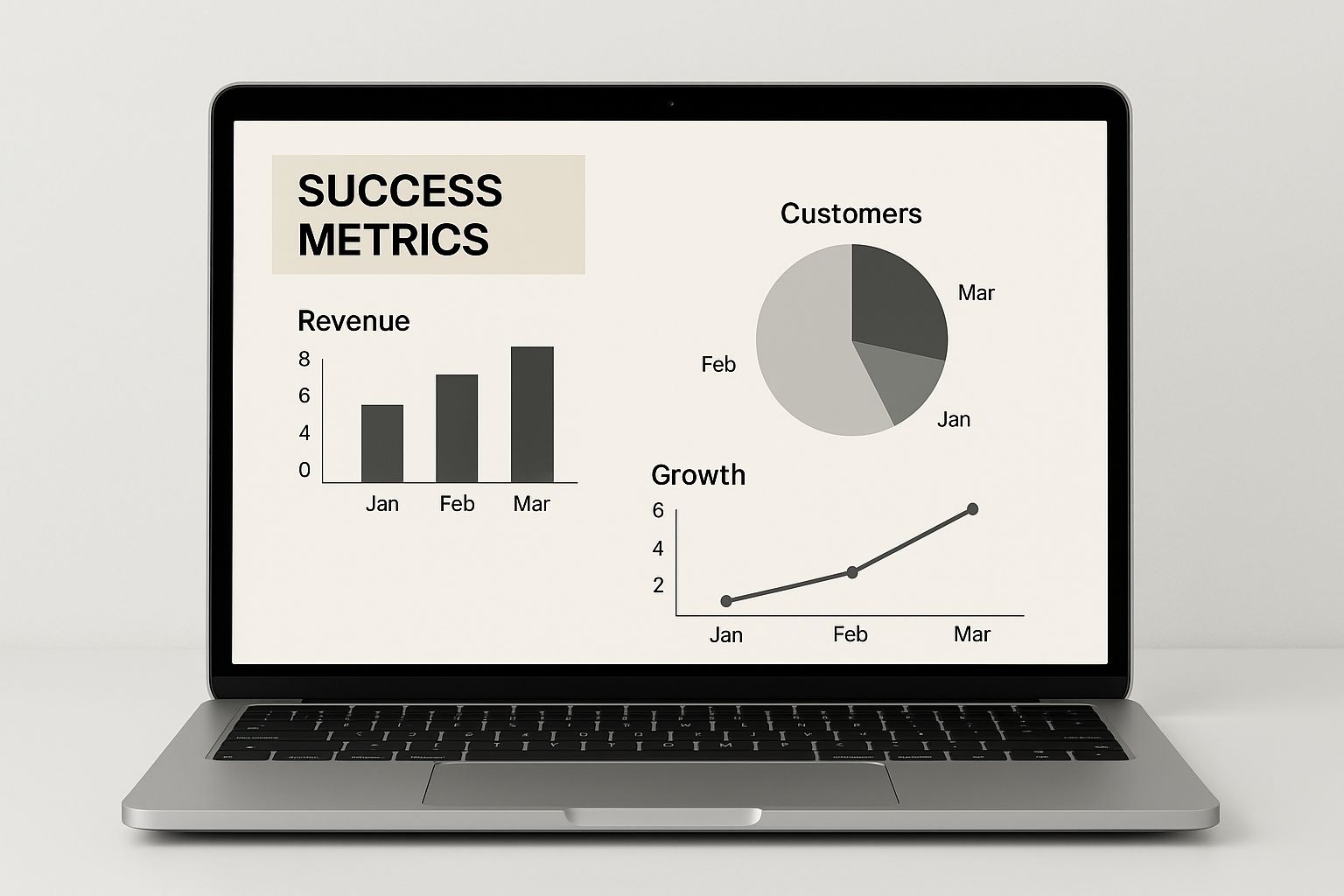
The trick is to not just collect this data, but to present it in a way that tells a compelling story. Learning the basics of a business intelligence dashboard can help you turn these raw numbers into a clear picture of success that any stakeholder can understand.


Common Questions About the Change Management Process


Even with the best-laid plans, the reality of managing change always brings up tough questions. Let's tackle a few of the most common hurdles people face when they're in the trenches of a real-world project.


What Is the Biggest Mistake to Avoid?


If there's one mistake that can single-handedly sink a change initiative, it's poor or insufficient communication. It's the absolute classic. When leadership doesn't constantly and clearly explain why a change is happening, people are left to fill in the gaps themselves. That void almost always gets filled with rumors, fear, and anxiety—the perfect recipe for resistance.


Remember, good communication isn't a one-and-done email announcement. It has to be an ongoing, two-way conversation that speaks to different groups in ways that resonate with them. A very close second mistake? A lack of active, visible sponsorship. People watch their leaders very closely to see if a project is just the "flavor of the month" or a real priority.


How Do You Handle Employee Resistance?


First things first: resistance is a normal, human reaction to being disrupted. It's not a sign that you have bad employees. The smartest thing you can do is treat that resistance as valuable feedback, because it's telling you exactly where the friction points are in your plan.


You have to start by listening to figure out the root cause. Are people genuinely afraid of the unknown? Are they worried they’ll lose control over their work? Or do they have a legitimate, well-reasoned disagreement with the change itself? Once you know what's really driving the pushback, you can address it head-on.


This could look like:


  • Targeted Communication: Directly answering the specific "what-if" questions that are making people nervous.

  • Robust Training: Giving people the skills and, just as importantly, the confidence to feel successful in the new way of doing things.

  • Active Involvement: Bringing the skeptics into the process. Giving them a seat at the table can transform them from critics to owners.


Trying to steamroll or ignore resistance will only make it dig its heels in deeper. The goal is to understand the concerns, not just quiet the dissent. Empathy is your best tool for this.

Can Small Businesses Use This Process?


Absolutely. The core ideas behind change management are universal and scale up or down beautifully. You don't need a massive corporate hierarchy to benefit from them.


For a small business, "change management" just means being deliberate about the people side of a transition. It’s about having leaders who clearly paint the picture of where you're going, giving the team the support and training they need to get there, and then leading by example. Models like ADKAR are great for smaller teams because they focus on the individual's journey through the change. The key isn't bureaucracy; it's simply managing the transition with purpose, no matter how big or small your company is.


Are manual processes slowing down your growth? Flow Genius specializes in designing and implementing smart automation solutions that eliminate bottlenecks and free up your team to focus on what matters most. Reclaim your time and achieve scalable success with Flow Genius today.


At its core, a project communication plan template is a simple but powerful document. It’s your roadmap that lays out exactly how, when, and to whom you'll share project information. Think of it as the playbook that keeps every single stakeholder on the same page.


Using a pre-built template from the start is a game-changer. It stops you from accidentally forgetting critical details and gives you a solid framework for success before the project even kicks off.


Why Projects Fail Without a Communication Plan


I’ve seen it happen time and time again: projects don't implode because of a technical glitch. They collapse under the weight of poor communication.


When teams are left to their own devices without a clear plan, chaos is inevitable. Deadlines start slipping, scope creep goes unnoticed, and stakeholders get progressively more frustrated. It's a predictable and entirely avoidable downward spiral. A project communication plan isn't just another piece of administrative fluff; it’s the strategic backbone of your entire operation. It becomes the single source of truth, cutting through the noise and ambiguity that lead to expensive mistakes.


The Real Cost of Poor Communication


Without a structured plan, information travels erratically, if at all. Picture this: a developer is blocked, waiting for a key decision from a manager who has no idea they're the bottleneck. At the same time, an executive sponsor is looking at an outdated status report, leading them to believe everything is on track when it's really starting to go off the rails.


These seemingly small disconnects snowball into massive problems faster than you’d think.


  • Blown Budgets and Timelines: When requirements are misunderstood or updates are missed, you get rework. Rework means unplanned hours and unbudgeted expenses.

  • Reduced Team Morale: Nothing kills motivation faster than constant confusion. When no one knows what's going on, frustration and disengagement are sure to follow.

  • Damaged Stakeholder Trust: When key stakeholders feel out of the loop or are blindsided by bad news, their confidence in both the project and your team takes a serious hit.


This isn't just anecdotal. Industry data consistently points to unclear communication as a primary culprit in project failure. It’s the root cause of so many misunderstood deadlines and overlooked deliverables.


A communication plan turns reactive problem-solving into proactive alignment. It defines the rules of engagement, ensuring every message has a purpose, an audience, and a clear channel.

To give you a quick overview, here are the essential elements you'll typically find in a robust project communication plan template.


Core Components of a Project Communication Plan


Component

Purpose

Key Benefit

Stakeholder Analysis

Identify everyone involved and their specific information needs.

Ensures the right people get the right information, preventing overload.

Key Messages

Define the core project goals, status updates, and milestones.

Creates consistent and clear messaging across all channels.

Communication Channels

Specify the tools to be used (e.g., Slack, email, meetings).

Eliminates confusion about where to find specific types of information.

Frequency & Cadence

Set the schedule for each type of communication (e.g., daily, weekly).

Manages expectations and establishes a reliable rhythm for updates.

Owner/Sender

Assign responsibility for sending each communication.

Establishes clear accountability for keeping everyone informed.

Feedback Mechanism

Outline how stakeholders can ask questions or provide input.

Fosters a two-way dialogue and helps identify issues early.


Getting these components right from the start is what separates a document that gets filed away from one that actively guides your project to success.


From Document to Strategic Tool


This is precisely where a project communication plan template becomes so valuable. It’s more than just a form to fill out; it's a strategic tool that forces you to think through these issues before they become problems. Who really needs to know this? When do they need to know it? And what’s the absolute best way to get that information to them?


To head off these potential failures, it's crucial to implement effective strategies to improve communication at work. A good template gives you the foundation, walking you through these essential components.


By setting up this framework early, you're building a system that drives clarity and accountability throughout the project. And to make sure this critical plan is always easy to find and up-to-date, it’s a good idea to follow sound document management practices, which you can learn more about here: https://www.flowgenius.ai/post/9-document-management-best-practices-for-2025.


Mapping Stakeholders and Their Communication Needs


Before you even touch that communication plan template, you have to ask the most important question: who are we actually talking to? A truly effective plan isn't about blasting out updates; it's about knowing your audience inside and out. This means going deeper than just a list of names—it’s about digging into each person's role, their level of influence, and what they really need to know.


Let's take a classic example: a new software launch. Your CEO doesn't want (or need) a play-by-play on every bug fix. What they need is a clean, high-level summary in their inbox once a week, confirming the project is on track and within budget. That’s it.


On the flip side, your lead developer needs the gritty details—technical updates, bug reports, and potential blockers—delivered instantly in a shared Slack channel so they can take action. Sending the same message to both of them is a fast track to confusion and disengagement.


Identifying Your Key Players


First things first, start a running list of every single person, team, or outside group with a stake in your project's success. Think big here; you can always trim it down later.


  • Internal Stakeholders: This is your core crew—the project sponsor, your immediate team, various department heads, and the executive team.

  • External Stakeholders: Don't forget the people outside your organization. This includes clients, the actual end-users, any vendors you’re working with, and even regulatory agencies. Proper vendor communication is a whole art in itself. If you're juggling multiple vendors, check out our guide on vendor management best practices.

  • Secondary Stakeholders: Think about who gets impacted downstream. The customer support team that will field questions after launch? They're stakeholders, too.


Once you’ve got your list, it's time to map them out. I’m a big fan of the classic influence/interest grid. It’s a simple way to see where you should focus your energy. You'll quickly sort everyone into four groups: high influence/high interest (manage these folks closely!), high influence/low interest (keep them satisfied), low influence/high interest (keep them in the loop), and low influence/low interest (monitor from a distance).


Decoding Communication Preferences


Okay, you know who you're talking to. Now, how do they actually want to hear from you? This is where so many project managers slip up—they just assume. One manager might be glued to their email, while another only glances at direct messages in your project management software.


The real goal here is to make receiving information easy and convenient for them, not just for you. This one small shift in mindset makes it infinitely more likely that your message will actually be read, understood, and acted upon.

This isn’t just about being considerate; it has a real-world impact. Research from the project management world shows that projects that nail their stakeholder communication see their success rate jump by roughly 35%. Teams that get this right from the start just move faster, plain and simple.


The key to making this work is mastering the art of [speaking your client's language](https://www.kogifi.com/articles/business-is-simple-speak-your-clients-language). It’s about adjusting your tone, how much detail you provide, and even the words you use for each group. Your finance stakeholder cares about ROI and budget numbers. Your technical lead cares about API specs and integration points. This kind of thoughtful tailoring turns a generic update into a genuinely useful tool that keeps everyone aligned and moving forward.


Setting Clear Communication Goals and Protocols


Effective project communication doesn’t just happen—it’s engineered. Once you've mapped out who your stakeholders are, the real work begins: defining what, exactly, you need your communication to accomplish. This is where you move past vague notions like "keeping everyone informed" and start setting concrete, measurable goals.


Your communication goals should be a direct extension of your overall project objectives. Is your main aim to speed up decision-making? Maybe it's to slash the number of soul-crushing weekly meetings that eat up everyone's time.


When you define what success looks like, your plan becomes more than just a document. It becomes a living guide that actively cuts through the noise and keeps the project on track. For instance, a solid goal could be to ensure 95% of critical decisions are documented and shared through your project management tool within 24 hours.


Defining Your Communication Protocols


Think of protocols as the specific rules of the road for different communication scenarios. They take the guesswork out of the equation and create a predictable, consistent flow of information, which is a lifesaver when things get chaotic.


These rules are essentially standard operating procedures for how your team talks to each other. They build a reliable framework that everyone can depend on. You can see just how powerful this kind of structure is by reading up on the https://www.flowgenius.ai/post/8-key-benefits-of-standard-operating-procedures-in-2025.


I like to frame protocols as simple "if-then" scenarios for the project:


  • Urgent Issue Escalation: If a team member hits a critical roadblock, then they immediately flag it in the dedicated Slack channel, tagging the project manager and team lead.

  • Routine Status Reports: Every Friday by 4 PM, status reports will be sent out using a standard email template that summarizes progress against milestones.

  • Decision Documentation: After a meeting where a major decision is made, the host must summarize it and email all relevant stakeholders within one business day.


Laying down these ground rules from the start gives your team immense clarity. They know precisely what to do and what to expect, which lets them focus on their actual work instead of getting bogged down in communication chaos.

As you build out these protocols, it's a smart move to pull from established internal communication best practices.


Aligning Goals with Project Reality


The best communication plans are born from a solid understanding of the project's constraints and the stakeholders' preferences. I’ve seen it time and again: projects with clear communication goals that tie directly to the big-picture objectives have far better stakeholder engagement and way fewer conflicts.


When you base your protocols on real-world needs, you can dramatically cut down on delays and foster genuine teamwork. This alignment ensures your communication plan isn’t just a box-ticking exercise but a practical, powerful tool built for the unique demands of your project.


Choosing the Right Channels and Cadence


Picking the right communication channels isn't just about choosing your favorite app. The tool you use fundamentally changes how your message is received. An urgent blocker flagged in a Slack message feels very different from a formal risk assessment detailed in a weekly email. Your project communication plan needs to lock down not just what you say, but precisely where and how often you say it.


Think about it this way: you wouldn't use a megaphone to have a quiet, one-on-one chat. In the same vein, blasting out a project-wide email for a question meant for a single developer just creates noise and confusion. Matching the tool to the task is the secret to keeping communication flowing smoothly.


Selecting the Best Communication Channels


The real goal here is to align your channels with the message's urgency, its complexity, and who needs to see it. A quick question never needs a 30-minute meeting, and a major project decision should absolutely not happen in a rapid-fire chat thread where crucial details can get buried in seconds.


Here’s how I typically break down the common channels and where they shine:


  • Instant Messaging (e.g., [Slack](https://slack.com/), [Microsoft Teams](https://www.microsoft.com/en-us/microsoft-teams/group-chat-software)): This is your go-to for quick, informal questions, real-time brainstorming, and urgent updates that need eyes on them right now.

  • Email: Reserve this for more formal announcements, sending out detailed status reports, and creating a clear paper trail for important decisions.

  • Video Calls (e.g., [Zoom](https://zoom.us/), [Google Meet](https://meet.google.com/)): Absolutely essential for hashing out complex problems, team-building, and any discussion where seeing someone's expression and hearing their tone makes all the difference.

  • Project Management Software (e.g., [Asana](https://asana.com/), [Jira](https://www.atlassian.com/software/jira)): This is your single source of truth for task-specific updates, feedback on deliverables, and tracking project progress without clogging up other channels.


The biggest mistake I see teams make is defaulting to a single channel for everything. A truly effective plan uses a mix of tools, playing to each one's strengths. This cuts down on the noise and brings a ton of clarity for everyone.

Choosing the right tool for the job is a common challenge. To help you decide, here’s a quick comparison of the most popular channels we see on projects.


Matching Communication Channels to Project Needs


Channel

Best For

Pros

Cons

Instant Messaging

Quick questions, urgent alerts, informal team bonding.

Fast, real-time, great for immediate feedback.

Can be distracting, easy for important info to get lost.

Email

Formal announcements, detailed reports, official documentation.

Creates a record, good for non-urgent, detailed info.

Can lead to long threads, slow response times.

Video Calls

Complex problem-solving, strategic planning, 1-on-1s.

High-quality interaction, good for building relationships.

Requires scheduling, can lead to "Zoom fatigue."

Project Mgmt Tool

Task updates, file sharing, progress tracking.

Centralized info, clear accountability.

Can feel impersonal, requires consistent team adoption.


Ultimately, a balanced approach works best. Use this table as a starting point to define in your plan which channel is the "official" one for certain types of communication.


Establishing a Predictable Communication Cadence


Once you've nailed down your channels, it's time to set the rhythm—the cadence. This is all about creating a predictable, reliable schedule for your communications. When you have a solid cadence, you eliminate information overload and stop people from feeling like they're in the dark. It trades the anxiety of the unknown for the comfort of a routine.


Instead of stakeholders constantly pinging you with, "What's the status?" they already know a detailed report will land in their inbox every Friday afternoon. This kind of predictability builds a massive amount of trust and frees your team up to focus on their actual work, not on managing communication worries.


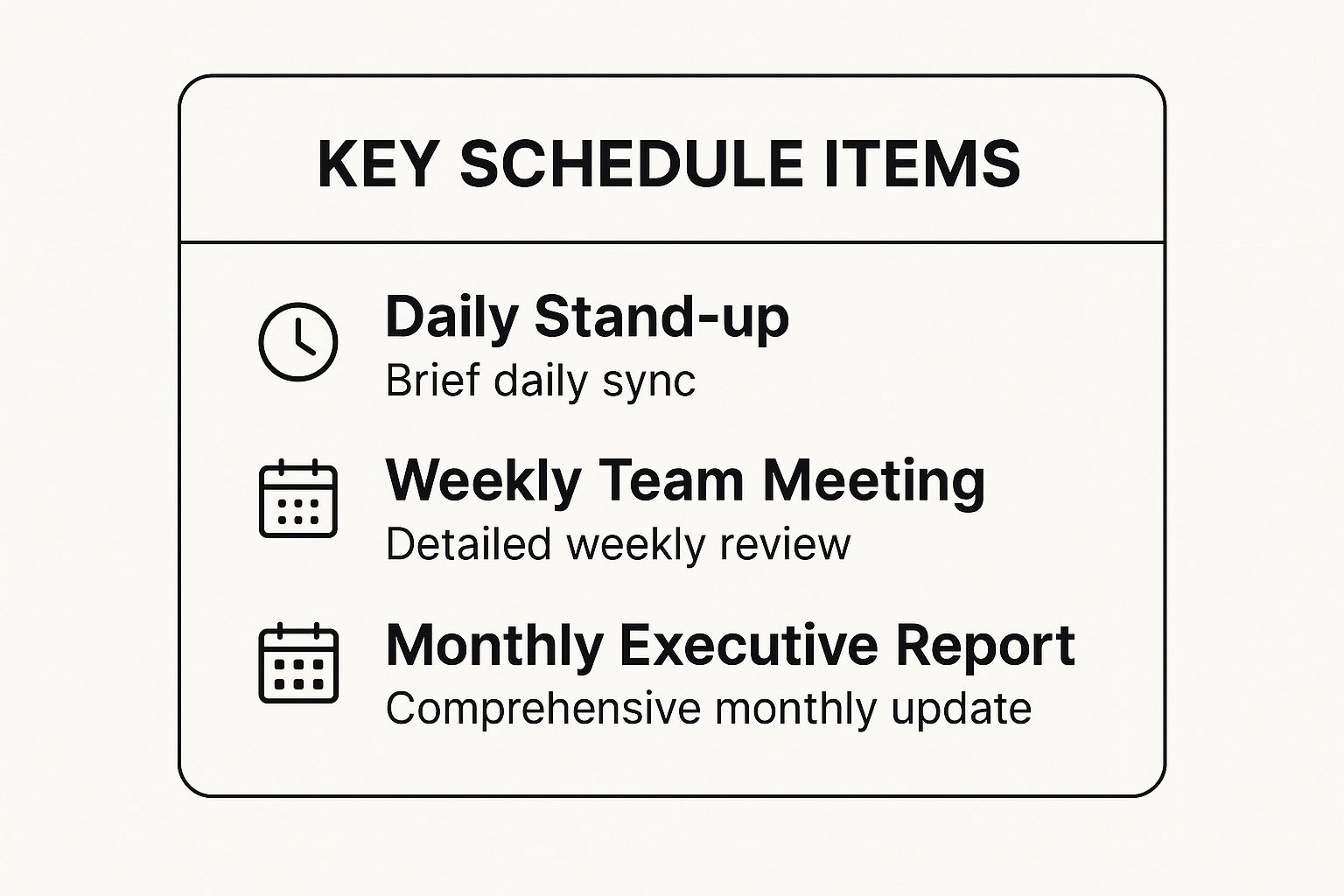
This is a great example of what a communication schedule can look like, showing how different meetings and reports are tailored to specific groups.


As you can see, cadence isn't just about how often you talk; it's about matching the level of detail to the audience's needs. The core team gets daily check-ins, while executives get high-level monthly summaries. Your project communication plan template is the perfect place to document this entire schedule so everyone is on the same page from day one.


Adapting Your Template for Real-World Projects


A downloadable project communication plan template is a fantastic starting point, but let’s be honest—no template is a one-size-fits-all solution. Think of it more like a recipe. You have the core ingredients and steps, but the real magic happens when you start adding your own spice and adjusting for the specific tastes of your guests. That’s where the real value comes in: when you mold the template to fit the unique landscape of your project.


Every project has its own personality. You have different team dynamics, unique stakeholder quirks, and varying levels of complexity. A small, scrappy marketing team pushing a new social media campaign needs a plan that's lightweight and nimble. But if you’re managing a massive enterprise software deployment, you’ll need something far more formal and structured. Your first job is to see the template as a flexible framework, not a set of commandments.


From Stakeholder Register to Communication Matrix


So, how does this look in practice? Let's take a common scenario: a marketing campaign launch.


For a small, in-house team, your stakeholder register might be as simple as listing the marketing manager, a content creator, a designer, and the head of sales. Their communication needs are pretty straightforward. Maybe it’s mostly real-time pings in a dedicated Slack channel and a quick weekly huddle to stay aligned. Simple.


Now, imagine that same campaign inside a huge global company. The stakeholder list just exploded. Suddenly, you're dealing with a CMO, legal and compliance officers, multiple regional sales directors, and an external PR agency. The communication needs become wildly different.


  • Legal Team: They need to see every single piece of public-facing copy. Their preferred channel isn't a casual chat; it's a formal email with a clear approval chain.

  • CMO: They don't have time for the daily minutiae. All they want is a high-level weekly summary hitting the key performance indicators (KPIs) and budget status.

  • PR Agency: They need to be in lockstep with your team, probably requiring daily check-ins through a shared project management tool like Asana or Trello to coordinate press releases.


This is where your communication matrix comes to life. The template gives you the columns and rows, but you have to fill in the blanks with the reality of your project.


A project communication plan isn't a document you create, file away, and forget. It should be a living guide. If it’s not pinned to your project dashboard and referenced regularly, it’s not doing its job.

Gaining Team Buy-In and Integration


Here’s a hard truth: a plan is completely useless if your team ignores it. The single best way I've found to get everyone on board is to build it with them, not for them.


Don't just fill out the template in a silo and present it as a finished product. Instead, get the key players in a room (or on a call) and hash it out together. Ask them what actually works. Do they genuinely find daily stand-ups valuable, or would a quick end-of-day summary in Slack be more efficient and less disruptive?


This simple act of collaboration transforms the plan from a top-down directive into a shared agreement. Once you've got it locked in, integrate it directly into your team's existing tools. Link to the document in your project management platform's overview, and make it part of the onboarding for any new members who join. That’s how you make it an active, evolving part of your project’s success.


Got Questions About Your Communication Plan? We've Got Answers


Even with a killer template, you're going to have questions. Projects are living, breathing things, and your communication plan has to be nimble enough to keep up. Let's dig into some of the most common questions I hear from project managers as they start putting their plans into practice.


These aren't just textbook scenarios; they're the real-world curveballs that can derail your project's momentum. Getting a handle on them now will save you a world of pain later.


How Often Should I Actually Update This Thing?


Think of your project communication plan as a living document, not some dusty relic you create once and then file away. It needs to grow and change right along with your project.


As a rule of thumb, it's smart to give it a formal review at major project milestones—say, at the end of a design sprint or when you close out a key phase. You should also revisit it immediately if there’s a major shake-up, like a big change in scope, a timeline shift, or a new executive sponsor joining the party. For projects that span several quarters, I always recommend a quick quarterly check-in to make sure the plan is still hitting the mark.


What’s the Biggest Mistake People Make?


Hands down, the single biggest mistake is building the plan in isolation. If you go off into a corner and create the "perfect" plan without talking to your team or stakeholders, I can almost guarantee it will fall flat. Why? Because it won’t match how people actually communicate.


When a plan ignores how your team prefers to get updates or what channels stakeholders actually check, it's doomed from the start. People will just ignore it. The fix is simple: make it a team effort. Get everyone involved in defining the what, when, and how of communication. This builds instant ownership and ensures the plan is grounded in reality from day one.


A plan built with your team becomes a shared agreement, not a top-down rule. That small difference is everything when it comes to getting people to actually follow it.

Is It Possible for a Communication Plan to Be Too Detailed?


Oh, absolutely. While you want to be clear, a plan that’s overly prescriptive can create more problems than it solves. The whole point is to make work smoother and clearer, not to wrap every conversation in red tape.


My advice? Stick to the high-stakes stuff: major decisions, official status updates, and how to flag a serious risk. If your plan is so detailed that it gets in the way of a quick, informal chat, your team will find ways to work around it. You're looking for that sweet spot—enough structure to keep everyone aligned on the important things, but enough flexibility to let your team collaborate freely. Your plan should be a launchpad, not a cage.


Ready to stop communication chaos and get your projects back on track? At Flow Genius, we build custom automation solutions that streamline your workflows and eliminate manual tasks. Let us design a system that keeps your team perfectly synchronized. Learn more and book your consultation with Flow Genius today.


bottom of page