top of page

Insights

Short. Precise. Effective.

Improving business efficiency isn't about one-off fixes or simply cutting costs. It's about building a living, breathing system—a cycle of auditing your processes, smartly applying technology, and actually measuring what works. Forget the old, siloed way of thinking. Today, it's all about integrating your people, processes, and tech to work in harmony.


Your Blueprint for Modern Business Efficiency



Real gains in efficiency come when you look at the big picture, connecting every part of your organization. This isn't just about saving a few bucks; it's a core driver of resilience, growth, and genuine innovation. The aim is to create a company that not only runs like a well-oiled machine but can also pivot quickly when the market shifts.


To get there, you have to move beyond isolated tweaks and start thinking strategically. For instance, the lessons learned from proven strategies to improve fleet efficiency can be surprisingly applicable to almost any operational area. Adopting this mindset is the first step toward systematically finding and eliminating the friction that's holding your business back.


The Foundation of an Efficient Operation


The journey to better efficiency starts with a simple truth: it’s a continuous loop, not a one-time project. It’s about constantly asking the right questions. Where is time being wasted? Where are communication lines breaking? Where could a simple tool lighten the load for my team?


This entire approach rests on three core pillars:


  • Process Clarity: You can't improve what you don't fully understand. The simple act of mapping out your workflows is often an eye-opener, revealing hidden redundancies and frustrating bottlenecks.

  • Technological Integration: The right tools can automate soul-crushing repetitive tasks. This frees up your team to focus on the high-impact, strategic work they were actually hired to do.

  • People Empowerment: A truly efficient culture is built from the ground up. It’s one where your employees feel comfortable pointing out what's broken and suggesting better ways to get things done.


This isn’t just a nice idea; it’s a massive global priority. In fact, by 2025, spending on digital transformation is projected to rocket past $2.5 trillion. That's a huge investment, all aimed at automating grunt work and building integrated systems that just work better.


"Efficiency is doing things right; effectiveness is doing the right things." - Peter Drucker

This quote from Peter Drucker hits the nail on the head. The goal isn't just to do tasks faster. It's to make sure your team is spending their valuable time on the right tasks—the ones that actually move the needle on growth and keep customers happy.


The Core Pillars of Modern Business Efficiency


To build a sustainable model, it helps to break down efficiency into its fundamental components. This table outlines the essential areas where businesses can achieve lasting gains.


Pillar

Core Objective

Key Actions

Operational Workflow

To eliminate redundancies and bottlenecks in daily tasks.

Map current processes, identify manual steps, and standardize procedures.

Technology Stack

To connect disparate systems and automate repetitive work.

Audit existing tools, identify integration gaps, and implement automation platforms.

People & Culture

To foster a mindset of continuous improvement and empowerment.

Provide training on new tools, create feedback channels, and reward innovation.

Data & Analytics

To make informed decisions based on performance metrics.

Define key performance indicators (KPIs), implement tracking systems, and review data regularly.


By focusing on these four pillars, you create a balanced approach that addresses not just the "how" but also the "why" and the "who" behind your operations.


Creating a Sustainable Cycle of Improvement


Ultimately, building a truly efficient organization is about embedding this thinking into your company's DNA. It’s about creating a culture where optimization is everyone’s job, not just a line item on a manager's to-do list. When your team feels empowered to question clunky, outdated processes and experiment with better methods, you unlock a powerful, self-sustaining engine for improvement.


The next sections will give you the practical, actionable steps for auditing your workflows, picking the right tools for the job, and measuring the real-world impact of your changes. By following this blueprint, you'll lay the groundwork for an operation that is not just efficient, but also agile and ready for whatever comes next.


Find the Bottlenecks by Auditing Your Workflows


Before you can make anything more efficient, you have to get brutally honest about how things really get done right now. Guesswork won't cut it. A workflow audit is your chance to pull back the curtain and map out your processes, step by step, to see exactly where things get stuck, slow down, or just go completely off the rails.


This isn’t about pointing fingers. It’s about getting a clear picture so you can make smart, targeted improvements. The goal is to create a simple inventory of pain points and time-wasting tasks that are quietly draining your resources and frustrating your team.
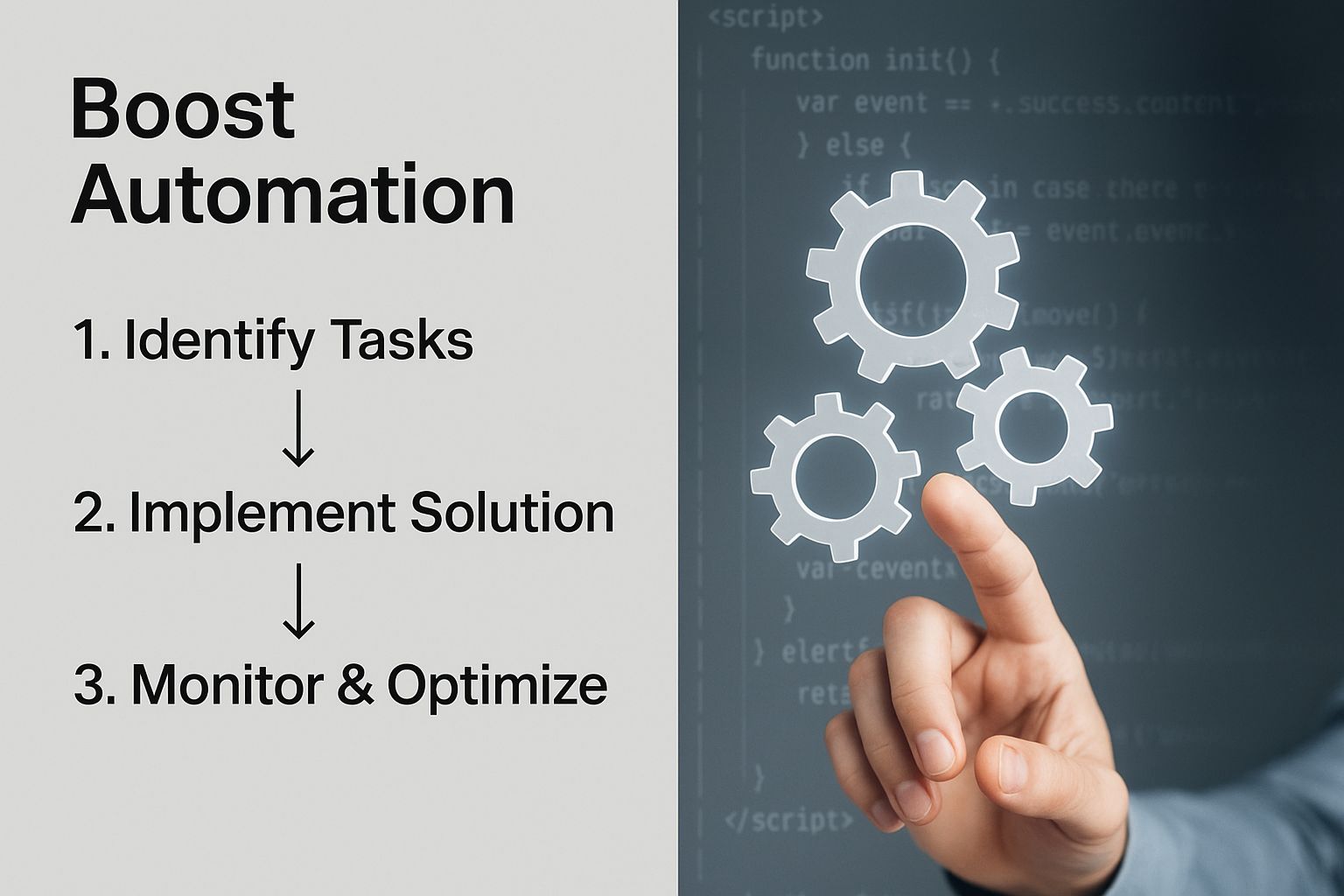


This image really drives home a key point: efficiency isn't just about speed. It’s about creating a connected system where information and tasks flow smoothly from one stage to the next.


Start with One High-Impact Process


Trying to audit everything at once is a surefire way to get overwhelmed and give up. Instead, pick one critical process to start. Good candidates are usually high-value, happen frequently, or are a known source of headaches for your team.


Processes that touch multiple people or departments are often goldmines for improvement, since handoffs are where things most often break down.


Let's take a classic example I see all the time: a marketing team's content approval cycle. It’s a process that is notorious for becoming a bottleneck that stalls campaigns.


  • The Goal: Publish a blog post.

  • The Players: A writer, an editor, a designer, a legal reviewer, and the marketing manager.

  • The Perceived Problem: "It just takes forever to get anything published."


This is a perfect starting point. It’s specific, involves a handful of people, and directly impacts the team's goals. Fix this one workflow, and you'll see a real difference in output.


Map the Messy Reality


Now for the fun part. You need to map the process exactly as it is today—not how it’s supposed to be in the handbook. The best way I’ve found to do this is to get the key people in a room (or on a Zoom call) with a virtual whiteboard.


Start at the beginning and trace the journey of that blog post from the first draft to the moment it goes live. Ask clarifying questions to uncover every single little action.


  1. Kick-off: The writer finishes the draft. What happens immediately after? Do they save it to Google Drive and then send an email? Do they drop a link in a Slack channel? Be specific.

  2. Reviews & Feedback: The editor gets it. How do they leave comments? Directly in the doc with track changes? In a project management tool like Asana? In a separate email with a list of notes?

  3. Handoffs: Once edited, how does the designer get looped in for graphics? How is legal notified for their review? Do these things happen at the same time, or one after another? Every handoff is a potential delay.

  4. Final Go-Ahead: Who gives the final sign-off? How is that approval communicated to the person hitting "publish"?


By the end of this, you’ll have a visual map that probably looks a lot more tangled and chaotic than anyone realized. Seeing it laid out like that is incredibly powerful.


The biggest efficiency killers are almost never the big, obvious steps. They're hidden in the small, unwritten moments between the steps—the waiting, the follow-ups, the confusion, and the miscommunication.

This map is your foundation for understanding what’s really going on. If you want to explore this concept further, our guide on how to improve operational efficiency takes a broader look at these principles.


Pinpoint the Friction


With your messy workflow map staring back at you, the problems will practically jump off the page. Now you can start looking for the common culprits that kill productivity.


Common Bottlenecks to Watch For:


  • Manual Data Entry: Did someone have to copy and paste the blog post from a Word doc into WordPress? That's a classic automation opportunity.

  • Approval Delays: Where did the process grind to a halt? You’ll often find it sitting in one person's inbox. The map might reveal a single manager is the chokepoint for 80% of all content approvals.

  • Lack of Clarity: Do people constantly ask, "Whose court is this in?" or "What's next?" This is a dead giveaway that the process itself is broken.

  • Redundant Work: Is the same piece of information being typed into multiple systems? For instance, is the blog title updated separately in the document, the project card, and the content calendar?


Circle these friction points right on your map. In doing so, you'll turn a confusing diagram into a prioritized, actionable list of problems to solve. This is no longer just a theory—it's a concrete blueprint showing you exactly where to focus your efforts for the biggest impact.


Choosing the Right Automation Tools for Real Problems



Okay, you've mapped out your workflows and pinpointed the real bottlenecks. That hard work pays off now. Instead of just guessing, you can start looking for tools that solve specific, documented problems. This is the secret—let the problem dictate the tool, not the other way around.


The market for automation tools is massive, which is both good and bad. There’s a solution for almost anything, but the sheer volume of options can feel overwhelming. Your workflow audit is the perfect filter, helping you cut through the noise and find what will actually move the needle for your business.


No-Code Platforms vs. Custom Scripts: What’s the Difference?


Your first big decision is usually whether to go with a ready-made "no-code" platform or build something from scratch with a custom script. Understanding the pros and cons here is essential for making a choice that serves you both now and in the future.


No-code platforms like Zapier or Make are the Swiss Army knives of the automation world. They’re designed to act as translators between the apps you already use, letting them share data and trigger actions without you lifting a finger.


On the other hand, custom scripts are specialized tools crafted for one unique, and often complex, job. Think of these as small programs, usually written in a language like Python, built to handle a very specific sequence of tasks that no-code platforms just can't manage.


Here’s a simple way to think about it:


  • No-Code Platforms (Zapier, Make): Perfect for connecting popular cloud apps. If you want to automatically create a Trello card from a new email in Gmail or add a lead from your website form to a Mailchimp list, a no-code tool is your best bet. It’s fast, visual, and requires no programming knowledge.

  • Custom Scripts: The right choice for unique internal processes, heavy data manipulation, or integrating with systems that don't have an "app" you can connect to. For instance, scraping specific data from a competitor’s website and organizing it into an internal spreadsheet is a classic job for a custom script.


My advice? Always start with the simplest solution that gets the job done. Over-engineering a fix with a complex script when a simple Zap would have worked is just trading one form of inefficiency for another.


The goal is not to find a tool you can use, but to identify a problem that a tool must solve. Start with the pain point, and the right technology will become obvious.

This mindset keeps you from getting distracted by flashy features you’ll never use and puts the focus back where it belongs: making your business run smoother.


A Practical Framework for Picking a Tool


When you're looking at different automation tools, it’s easy to fall down a rabbit hole comparing feature lists. Instead, I use a simple framework that focuses on the practical needs of the business and the specific problem I'm trying to solve.


  1. Problem-Solution Fit: Does this tool actually solve the problem you identified? Don't settle for something that almost fixes it. If your bottleneck is manually copying data from a Typeform submission into your CRM, the tool must have solid, reliable integrations with both of those specific platforms. No exceptions.

  2. Scalability: Think about the future. A tool that works for 10 tasks a day might crumble or become wildly expensive at 100 or 1,000. Look at the pricing tiers. Does the cost balloon as your usage grows? Make sure the solution can grow with you.

  3. Ease of Use & Maintenance: How much technical skill is needed to get this running and keep it running? No-code tools are usually DIY, but custom scripts need a developer to build and to fix them when they inevitably break. That ongoing maintenance is a real cost you need to factor in.


Using this simple three-point check helps you make a strategic choice that provides immediate relief and won't create new headaches down the road.


Start Small, Win Big, and Build Momentum


The most successful automation projects I’ve seen all started small. Don't try to automate your entire operation in one go. You'll burn out.


Instead, pick one or two of the most annoying, time-sucking tasks from your audit and automate those first. This approach is powerful. For a look at how this plays out in the real world, check out these practical business process automation examples.


Starting with a small, visible win proves the value of automation almost immediately, which is crucial for getting your team on board. Once they see how a simple automation saves them an hour every single day, they'll become your biggest advocates for finding the next opportunity. For a deeper dive, our guide on https://www.flowgenius.ai/post/how-to-automate-repetitive-tasks-and-boost-productivity is a great next step.


This momentum is more important than ever. The business world is fully embracing this shift. In 2025, global spending on generative AI is forecast to hit an astounding $644 billion—that's a 76.4% increase from the year before. And it’s not just talk; 78% of business leaders confirm their companies are already using AI in at least one area, from customer support to financial planning.


These numbers aren't just trivia. They show that getting smart about automation isn't just about being more efficient anymore. It’s about staying in the game.


How People and Processes Work Together


Great tools are a good starting point, but they're only one piece of the puzzle. The real magic happens when you dial in the connection between your people and your processes. Even the most sophisticated automation setup will fall flat if your team's communication is a mess. We need to focus on the human side of the equation—how people collaborate, make decisions, and interact every day.


True efficiency isn't about fancy software; it's about removing the friction in how your team works together. Think about it: endless email chains, constant status update meetings, and waiting forever on simple approvals are all signs of a broken process, not lazy people. By setting up clear, simple protocols, you give your team the guardrails they need to do their best work.


Stop the Distractions and Let People Focus


Nothing kills productivity faster than constant interruptions. The average person gets pulled off-task every few minutes, and it takes over 20 minutes to get back into a deep state of focus. This is where clear communication guidelines can be a game-changer.


First things first: get status updates out of everyone's inbox and out of the meeting room. A project management tool—whether it's Trello, Asana, or Jira—should be your single source of truth. When the entire team knows exactly where to find the latest updates, those "just checking in" emails and meetings simply disappear.


This small change naturally encourages asynchronous communication. It's not about banning real-time chats. It's about respecting each other's time by making async the default. A detailed comment on a project card is often far more effective (and less disruptive) than a tap on the shoulder.


Give Your Team the Authority to Act


One of the biggest bottlenecks I see in businesses is the approval queue. When a few key managers have to sign off on every little thing, work grinds to a halt. The simplest way to pick up the pace is to empower your team to make decisions within their defined roles.


Of course, this requires trust and clear boundaries. You need to define the scope of their decision-making power. For instance, a customer support rep could be authorized to issue refunds up to $100 without needing a manager's approval. This not only resolves customer issues in minutes instead of days but also boosts employee morale and makes them feel trusted.


Empowered teams don't just work faster; they work smarter. When people closest to the work have the authority to act, they spot opportunities and solve problems long before they ever escalate to management.

This kind of cultural shift changes your team from people who just do tasks to people who actively drive the company's success. It builds a proactive culture where everyone is looking for ways to improve things.


Make "Getting Better" Everyone's Job


The most efficient companies I've worked with treat optimization as a team sport. Your people on the front lines see the clunky workarounds and frustrating extra steps that leadership often misses. You absolutely need a simple, formal way for them to share their ideas.


This could be a dedicated Slack channel, an easy-to-use suggestion form, or even a standing agenda item in your weekly team meeting. The most important part is making it obvious that every idea is welcome and will be taken seriously. When you act on a suggestion and give public credit to the person who brought it up, you create a powerful feedback loop that encourages more great ideas.


This way, everyone starts thinking like an owner, constantly asking, "Is there a better way to do this?" For a deeper dive into refining these internal systems, check out our guide on how to streamline business processes for better efficiency today. By building these systems for clear communication and real empowerment, you create an organization that doesn’t just run well—it’s always getting better.


Weaving Sustainability into Your Business for Lasting Gains


When we talk about making a business more efficient, our minds usually jump to tech and workflows. But there’s a powerful, often missed, strategy right in front of us: sustainability. This is about more than just good PR or a corporate responsibility checkbox. Integrating Environmental, Social, and Governance (ESG) principles into how you operate is a direct line to smarter resource management and serious cost savings.


Thinking sustainably forces you to take a hard look at every nook and cranny of your business, from the materials you source to how you get your product into a customer's hands. This perspective naturally shines a light on waste you’d otherwise never see. It’s an investment that builds a tougher, more profitable company that's built to last.


Finding Profit in Greener Practices


The link between sustainability and efficiency really clicks when you look at real-world examples. Take packaging. Switching to a more compact, eco-friendly design does more than just win over green-minded customers; it directly slashes your material costs.


Lighter, smaller packages also mean cheaper shipping, which can be a massive budget-eater. Those savings drop right to your bottom line, and you lower your carbon footprint at the same time. It’s a classic win-win.


The same logic applies to investing in energy-efficient equipment. Sure, the upfront cost might be higher, but the long-term rewards are huge. Think about swapping out old office lights for LEDs or upgrading a clunky, energy-guzzling machine. You’ll see a dramatic drop in your utility bills month after month, giving you a reliable and predictable return on that initial spend.


The Power of the Circular Economy


One of the most profound ways to blend sustainability with efficiency is to embrace a circular economy model. This framework is a complete departure from the old "take-make-dispose" linear system. Instead, the whole point is to keep resources in play for as long as humanly possible.


This isn't some pie-in-the-sky idea; it's a practical business strategy that gets results. In fact, by 2025, top-tier companies are making ESG a core part of their operations to become more efficient and resilient. This often means adopting circular models that design waste out of the system from the start, which improves cost efficiency while shrinking their environmental impact. You can explore more insights on these trends and how they're shaping the future of business.


By completely rethinking your product's lifecycle, you can discover revenue streams that were literally hiding in your waste pile. What used to be a cost center can suddenly become a profit center.

This is a fundamental mindset shift. It’s about seeing value where everyone else just sees garbage and rethinking your entire relationship with your products and your customers.


Turning Waste into a Fresh Opportunity


So, what does this actually look like on the ground? Big retailers are showing us the way. Brands like Patagonia and Levi’s have seen incredible success by launching repair services and buy-back programs.


These programs are brilliant for a few key reasons:


  • Slash Raw Material Costs: When you refurbish and resell used products, you don't need to buy as many new—and often expensive—raw materials.

  • Create New Revenue Streams: The market for high-quality, pre-owned goods is exploding. Selling refurbished items opens up a whole new channel for income.

  • Boost Your Brand's Reputation: Today’s customers are fiercely loyal to brands that walk the talk on sustainability. These programs build that trust and attract a dedicated community.

  • Build Stronger Customer Bonds: Offering repair services keeps you connected to your customers long after they’ve made a purchase, which encourages loyalty and repeat business.


By building a closed-loop system, you're not just being a good corporate citizen. You're building a smarter, more efficient, and ultimately more profitable business from the inside out. It's definitive proof that doing good for the planet and doing well in business aren't competing goals—they're two sides of the very same coin.


How to Actually Measure the Impact of Your Efficiency Efforts


It feels great to roll out a new tool or tweak a clunky process. But until you have the data to back it up, those changes are just educated guesses. The old business adage, "If you can't measure it, you can't manage it," is spot on. To genuinely improve how your business runs, you have to move beyond gut feelings and start tracking the real-world results of your work.


This is where you connect your efforts directly to the bottom line. It’s how you prove the ROI of that new software subscription or justify the time spent remapping a workflow. By setting up clear metrics from the get-go, you create a powerful feedback loop that fuels continuous, data-driven improvement rather than just a series of one-off fixes.


First Things First: Establish Your Baseline


The single biggest mistake I see people make is jumping straight into a solution without first measuring the problem. Before you automate a single task or change one step in a process, you must create a baseline. Think of it as your "before" picture—the benchmark against which all your future progress will be measured.


Without this starting point, you’re just guessing. A baseline gives you the concrete evidence needed to say, "This change saved us 40 hours per month," instead of just, "I think things are running faster now."


To set a solid baseline, pick a few key performance indicators (KPIs) that directly relate to the pain point you’re trying to solve.


  • Slow sales process? Measure the average cycle time from when a new lead hits your CRM to when the deal is officially closed.

  • Overloaded support team? Track the number of tickets an agent can resolve per day or the average time to first response.

  • Clunky content pipeline? Count the number of revision rounds a blog post goes through or the total time from the first draft to publication.


These aren't vanity metrics. They're direct measurements of the friction you found during your audit.


Go Beyond Simple Numbers to Find Meaningful KPIs


Once your new process is live, the goal is to keep tracking those same KPIs. But it’s crucial to pick metrics that truly reflect efficiency, not just activity. For instance, tracking the number of emails your team sends is pretty useless. Tracking a drop in the number of emails needed to resolve a customer issue? Now that's valuable.


Here are a few powerful KPIs that get right to the heart of operational efficiency:


  • Cost Per Transaction/Action: Figure out how much it costs to complete a key action, like processing an invoice or onboarding a new client. As you introduce automation and streamline workflows, this number should go down.

  • Output Per Employee: A classic for a reason. Whether it’s sales calls made, products assembled, or articles written, tracking output helps you quantify real productivity gains.

  • Error Rate Reduction: Automation is brilliant at cutting down on human error. Track the percentage of orders with mistakes or invoices that need correction before and after your changes to see a direct lift in quality.


True efficiency isn't just about doing more work in less time. It's about achieving better outcomes—fewer errors, lower costs, and happier customers—with the same or fewer resources.

This mindset helps you focus on what really matters. A 15% reduction in your cost per transaction is a much more compelling story for your leadership team than simply saying you bought new software.


Don't Forget the Human Element: Qualitative Feedback


Data tells you what happened. Your team can tell you why. Numbers alone can't capture the whole story. Did automating that tedious report free up a team member to build a better relationship with a key client? Did the new project management system reduce stress and finally put an end to late-night work sessions?


This kind of qualitative feedback is gold. It reveals the human impact of your efforts, which is often just as important as the financial ROI.


Gathering this feedback doesn't have to be complicated.


  1. Quick Surveys: Use a simple tool like Google Forms to send out a short, anonymous survey asking the team how the new process feels.

  2. One-on-One Check-ins: Just casually ask team members during your regular meetings what they think of the new workflow.

  3. Team Retrospectives: Set aside 15 minutes in a team meeting to discuss what’s working well with the new system and what could still be tweaked.


When you combine hard data with human stories, you build an undeniable case for the value of your work. You prove that you’re not just making the business more efficient—you’re making it a better place to work.


Answering Your Top Questions About Business Efficiency


When you start digging into making your business run smoother, a lot of questions pop up. It's a common journey. Here are some straightforward answers to the questions I hear most often from leaders ready to boost efficiency and grow their business.


Where Do I Even Start?


The single best place to begin is with a workflow audit. Don't just guess where the snags are. You need to get a clear picture of a critical process from the very first step to the last.


Actually mapping it out—on a whiteboard, with sticky notes, whatever works—is a game-changer. It shines a light on all the hidden bottlenecks, duplicated efforts, and annoying delays that are costing you time and money.


And here's the most important part: get the people who do the work involved. Your team on the front lines knows exactly where the friction is. Their insights are pure gold and will turn a simple mapping exercise into a real plan for improvement.


How Do I Know if It’s Actually Working?


You measure it. But you have to measure the right things. Forget vanity metrics and focus on the key performance indicators (KPIs) that show real progress toward your goals.


I've found these are some of the most telling metrics:


  • Cycle Time: How long does it take to get one thing done, from start to finish? Shorter is always better.

  • Output Per Employee: A classic for a reason. Are you producing more units or closing more support tickets with the same team? That's a clear win.

  • Cost Per Acquisition: This tells you if your marketing and sales engine is becoming more efficient at bringing in new customers.

  • Error Rates: Faster is great, but faster with fewer mistakes is even better. A drop in errors means your process is more reliable.


The trick is to get your baseline numbers before you change anything. That way, you can clearly see the impact of your work and prove that these efficiency projects are paying off.


Is Automation Really for Small Businesses?


100% yes. I'd argue small businesses often get the biggest bang for their buck with automation. When you're a small team, every single hour you save has a massive impact on your bottom line and your ability to focus on what matters.


Modern no-code tools are the great equalizer. They give small businesses the kind of operational power that used to be reserved for giant corporations with big IT teams.

Tools like Zapier or Make let you connect the apps you already use every day, like QuickBooks and Gmail. Imagine automatically sending follow-up emails, creating invoice reminders, or moving data between spreadsheets without lifting a finger. You don't need a developer; you just need a plan. This frees up your team to do the creative, strategic work that actually grows the company.


Ready to stop wasting time on manual tasks and start building a more efficient business? Flow Genius specializes in creating and implementing the exact automation systems you need to eliminate bottlenecks and scale effectively. Schedule your free consultation today and discover how much time you could be saving.


Supply chain performance metrics are the specific, measurable data points you use to track and evaluate how well your entire supply chain is running. Think of them as the vital signs for your business—they measure everything from delivery speed and cost efficiency to customer satisfaction.


Why Supply Chain Metrics Are Your Business Dashboard


Could you imagine flying a plane without an instrument panel? You'd have no clue about your altitude, speed, or how much fuel is left in the tank. Running a supply chain without tracking performance metrics is the same kind of high-stakes guessing game. These numbers are the critical gauges on your company's dashboard, giving you the real-time data needed to navigate the wild world of modern commerce.


This isn't just about collecting numbers for the sake of it. It’s about turning that raw data into a clear story. A metric like the on-time delivery rate, for instance, is your speedometer—it tells you exactly how well you're keeping your promises to customers. Likewise, your inventory turnover is your fuel gauge, showing how efficiently you're using your working capital.


By consistently monitoring performance, businesses can shift from a reactive, fire-fighting mode to one of proactive, strategic decision-making. This visibility gives leaders the power to spot bottlenecks before they become disasters, rein in costs, and build a more resilient operation that can handle just about any disruption.

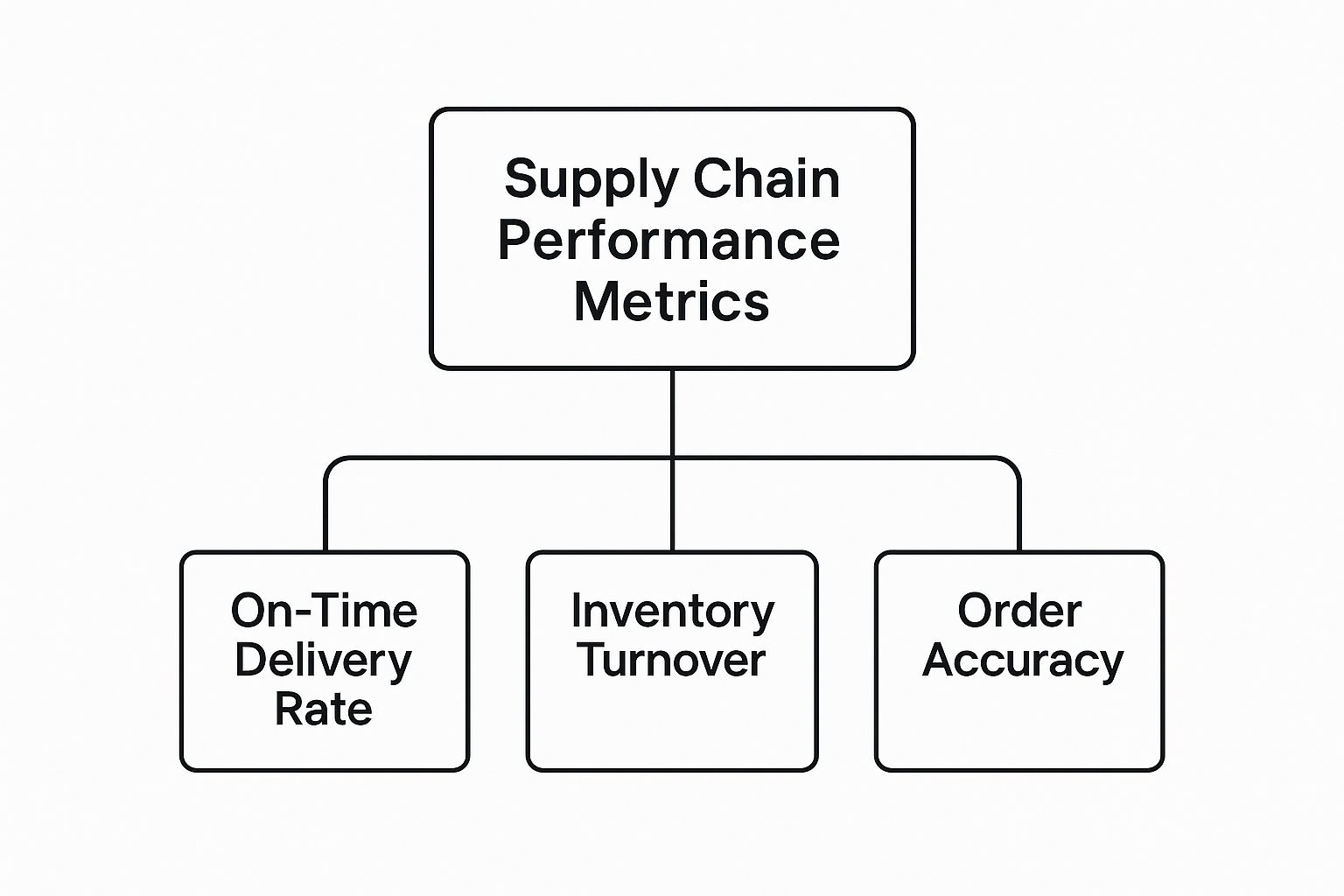
The following infographic breaks down the hierarchy of core metrics that businesses rely on to get a pulse on their operational health.


As you can see, top-level performance is really built on a foundation of solid, fundamental metrics covering delivery, inventory, and order accuracy.


The Five Pillars of Supply Chain Performance


With so much data available, it's easy to get overwhelmed. A good way to bring order to the chaos is to group your metrics into five core areas. Think of these as the five pillars holding up your entire operational structure. Each one answers a critical business question and helps you build a truly comprehensive performance measurement system.


Here's a quick look at these five pillars and the questions they help answer.


Metric Category

Primary Focus

Key Business Question Answered

Customer-Facing

The end-customer experience

Are we delivering on our promises to customers?

Inventory

Stock management and efficiency

Are we holding the right amount of product at the right time?

Warehouse

Internal fulfillment operations

How productive and accurate are our warehouse operations?

Transport

The movement of goods

Are we moving products efficiently and cost-effectively?

Supplier

Partner reliability and performance

Can we depend on our suppliers to meet our requirements?


Each of these pillars gives you a different, yet equally important, view of your supply chain's health. By understanding and tracking them all, you can see the complete picture.


To get a better handle on the most important indicators, check out this great resource on 8 Supply Chain Metrics & KPIs You Need For A Successful Business. Mastering these categories is what allows you to make smarter, faster decisions that keep you competitive and profitable.


The Perfect Order: Your Ultimate Customer Metric


If you’re looking for a single metric that tells you how well you're serving your customers, look no further than the Perfect Order Rate (POR). While many KPIs measure internal efficiency, this one is different. It looks at your entire supply chain from the only perspective that truly matters: your customer's.


Think of it as the final exam for your operation. It’s not about getting most things right; it’s about getting everything right. A single slip-up, no matter how small, means the order fails. This unforgiving standard is precisely what makes it such a powerful tool for driving real improvement.


Breaking Down the Four Elements of Perfection


So, what does a "perfect" order actually look like? It has to hit four specific targets. Miss even one, and the order is no longer perfect.


  • On-Time Delivery: The package shows up exactly when you said it would. Not early, not late.

  • In-Full Shipment: The customer gets everything they ordered. No backorders, no missing items.

  • Damage-Free Arrival: Every item is in perfect condition—no scratches, dents, or broken pieces.

  • Accurate Documentation: The invoice, packing slip, and any other paperwork are completely correct.


Calculating your rate is simple, but the result speaks volumes about your ability to deliver that flawless experience.


(Total Number of Perfect Orders / Total Number of Orders) x 100 = Perfect Order Rate (%)

Let's say you ship 1,000 orders in a month. If 880 of them hit all four marks, your POR is 88%. The other 120 orders all had at least one issue that let a customer down, whether it was a late delivery, a missing item, or a damaged product.


Why Striving for Perfection Matters


A low POR isn't just a number on a spreadsheet; it's a direct hit to your bottom line. Every imperfect order kicks off a chain reaction of costly problems: return shipping, replacement costs, customer service time, and—worst of all—lost customers.


Think about the ripple effect. A damaged item means you're paying for shipping twice. An incomplete order leads to a frustrated customer tying up your support team. These "small" failures add up fast, draining profits and chipping away at your brand's reputation. A high POR, on the other hand, is proof that your entire system is working together seamlessly.


Often, the biggest obstacle to a great POR is a simple communication gap between departments. If your sales team promises a delivery date that logistics can't possibly meet, that order is set up to fail from the very beginning. Getting everyone on the same page is crucial. For more on this, you can explore these 10 supply chain management best practices for 2025 to help align your teams.


So, what's a good benchmark? While 100% is the ultimate goal, world-class companies consistently hit a Perfect Order Rate of 90% or higher. Reaching this level shows a deep commitment to the customer experience, which pays off in loyalty, retention, and profitability.


Gauging Your Inventory and Warehouse Efficiency


If the perfect order is the ultimate measure of customer satisfaction, then your inventory and warehouse operations are the engine that makes it all happen. How you handle the products on your shelves and how efficiently you get them out the door directly impacts everything from your cash flow to keeping customers happy. Think of it as the internal health check for your supply chain.


This is where the real work gets done. The best marketing in the world can't make up for a disorganized warehouse or stock levels that are completely out of sync with demand. Let’s break down the key supply chain performance metrics that tell you how well this part of your operation is humming along.


The Speed of Your Stock: Inventory Turnover


One of the most foundational metrics is Inventory Turnover. This simply measures how many times you sell through and restock your entire inventory over a set period. In most cases, a higher number is a great sign—it means you've got strong sales and you're not letting products sit around for too long.


Think about a grocery store. The produce section has an incredibly high turnover; bananas and lettuce are sold and replaced almost daily. Meanwhile, the canned soup aisle turns over much, much slower. If your best-selling items are moving like canned soup, you've got a problem.


A low turnover rate can signal overstocking or weak sales, which means your cash is tied up in products that aren't moving. But a rate that’s too high might mean you’re understocking and missing sales because you can’t keep things in stock.

The real goal is to find that "just right" turnover speed for each of your products, making sure your money isn't just collecting dust on a shelf.


From Turnover to Time: Days of Supply


While turnover gives you a big-picture ratio, Days of Supply translates that into a number you can act on: how many days your current inventory will last. This metric is absolutely critical for avoiding the two classic, costly inventory blunders.


  • Stockouts: Running out of a popular item means lost sales and, even worse, frustrated customers who might just shop somewhere else next time.

  • Overstocking: Having too much stock on hand bloats your carrying costs—think storage fees, insurance, and the risk of obsolescence. It also drains cash that you could be investing in growth.


Knowing you have, say, 35 days of supply for a particular product allows you to make much smarter purchasing decisions and keep your inventory lean and responsive.


Inside the Warehouse: Picking Accuracy


The moment an order drops, your warehouse team jumps into action. Picking Accuracy measures the percentage of orders that are picked and packed without a single error. It might sound like a simple internal metric, but its impact is massive.


Every wrong item picked is a guaranteed imperfect order. That one mistake sets off a costly chain reaction: the cost to ship the wrong item, the cost to process the return, the cost to ship the correct item, and the impossible-to-measure cost of a damaged customer relationship. Improving this metric is a direct investment in your bottom line and customer loyalty. You can find more practical strategies in our guide on https://www.flowgenius.ai/post/how-to-improve-operational-efficiency.


Measuring the Pulse: Order Cycle Time


Finally, Order Cycle Time tracks the entire journey from the moment a customer clicks "buy" to the moment the package arrives at their door. This end-to-end metric is really a sum of several smaller steps:


  1. Order Processing: How long it takes for the order to hit your system and be ready for fulfillment.

  2. Warehouse Picking & Packing: The physical time it takes your team to get the shipment ready.

  3. Transit Time: The journey with the carrier to the customer's doorstep.


Shrinking this cycle time gives you a serious competitive edge. Even simple warehouse tweaks, like creating "golden zones" for your best-sellers to reduce walking distance, can shave off valuable time. And beyond the basics, modern tech like utilizing RFID for inventory control can make tracking even more precise. These internal improvements lead directly to faster deliveries and happier customers.


Optimizing Your Transportation and Logistics Costs


Once your products are picked, packed, and ready to go, they start the most public part of their journey: transportation. This is where the promises you make on your website meet the reality of the road, rail, or sky. Getting a handle on your transportation and logistics metrics isn't just about saving money—it's about keeping your word to your customers.


These crucial supply chain performance metrics are your eyes and ears while goods are in transit. They give you a clear picture of how efficiently things are moving and what kind of experience your customers are getting. Nail this stage, and you'll see a direct impact on both your bottom line and customer loyalty.


On-Time Delivery: The Ultimate Promise Keeper


If there's one metric that tells you how well you're keeping your promises, it's On-Time Delivery (OTD). This is a straightforward measure of the percentage of orders that actually make it to the customer’s doorstep within the timeframe you promised. A high OTD rate is a neon sign that screams "reliability," and it’s one of the most powerful drivers of repeat business.


On the flip side, a low OTD rate points to friction somewhere in your operation that's damaging customer trust. Late deliveries mean frustrated customers, a flood of "Where is my order?" calls, and a reputation that's slowly taking a beating. For any business that cares about its customers, tracking OTD is simply non-negotiable.


Freight Cost Per Unit: The Efficiency Benchmark


While keeping customers happy is priority one, you can't go broke doing it. The Freight Cost per Unit metric cuts through the noise of your total transportation spend and tells you exactly how much it costs to move a single product from your warehouse to a customer's hands.


Calculating this KPI is a fantastic way to sniff out inefficiencies and uncover some serious savings. You might find that consolidating shipments, for example, or going back to the table with your carriers could slash this cost, boosting your profit margin on every single thing you sell.


The core challenge in logistics is finding that sweet spot between speed and cost. You might need to shell out for air freight to get a critical part to a customer overnight, but you can rely on slower, cheaper ocean freight for your routine stock replenishment.

This is exactly where a modern Transportation Management System (TMS) proves its worth. A good TMS gives you the real-time visibility you need to track these metrics and adapt on the fly. When fuel prices spike or a port gets congested, you can make smart, cost-effective pivots without letting your service quality slip.


Global Logistics and Performance Benchmarks


It also helps to see how your transportation performance stacks up on a global scale. The World Bank's Logistics Performance Index (LPI) is a fantastic resource for this, benchmarking trade logistics quality and efficiency across different countries.


The 2023 LPI highlights that while many developing economies are improving, there's still a significant gap in logistics capabilities compared to more advanced nations. The index looks at everything from customs efficiency to infrastructure quality, giving you a much broader perspective on the global challenges you might face.


By keeping a close eye on these key logistics and transportation metrics, you can make sure your products move efficiently, affordably, and reliably. When you do that, your delivery experience stops being a cost center and becomes a genuine competitive advantage.


How to Measure and Improve Supplier Reliability


Your supply chain is only ever as strong as its weakest link. More often than not, that vulnerability lies with one of your suppliers. A single late shipment or a batch of shoddy components can grind your entire production line to a halt, creating ripple effects that impact everything from your costs to your customer satisfaction.


Measuring supplier reliability isn't about playing the blame game. It’s about building transparent, resilient partnerships that shield your business from costly disruptions. Just as you monitor your own internal efficiency, applying rigorous supply chain performance metrics to your vendors is a non-negotiable. This approach shifts your supplier relationships from being based on gut feelings to being grounded in cold, hard facts. It helps you identify your all-stars, spot warning signs with struggling partners, and work together on solutions before a small hiccup becomes a full-blown crisis.


On-Time In-Full: The Dual-Threat Metric


One of the best all-around metrics for taking a supplier's temperature is On-Time In-Full (OTIF). This powerful KPI is so effective because it merges two critical performance elements into a single, revealing score.


  • On-Time: Did the complete order show up by the promised delivery date?

  • In-Full: Did the shipment contain the exact quantity of every item ordered, with zero shortages or incorrect substitutions?


An order has to hit both targets to get a passing grade. This is key. It prevents a supplier from gaming the system by rushing an incomplete order out the door just to meet a deadline. A consistently high OTIF rate is one of the clearest signs you have a dependable, well-run partner on your hands.


Creating a Supplier Scorecard


Tracking metrics individually is a great start, but a supplier scorecard is what pulls it all together. Think of it as a report card for your partners that provides a consistent, fair, and holistic framework for evaluation. A good scorecard moves way beyond just delivery performance and incorporates other vital aspects of the relationship.


A supplier scorecard transforms subjective conversations into objective, data-backed discussions. It creates a shared language for performance, making it easier to set goals, track progress, and build stronger, more collaborative relationships.

An effective scorecard gives you a balanced perspective on each supplier's true value by tracking performance across a few key categories.


Key Supplier Scorecard Categories


  • Quality: What's the defect rate? How often are products failing inspection?

  • Delivery: What is their OTIF percentage? Are their lead times predictable?

  • Cost: Are they sticking to the budget? Is their pricing competitive and stable over time?

  • Responsiveness: How fast are they to respond to questions or jump on problems when they arise?


A close look at these metrics will tell you a lot about a supplier's health and its impact on your operations. Let's compare some of the most important ones.


Key Supplier Performance Metrics Compared


Metric

What It Measures

Industry Benchmark

Impact of Poor Performance

On-Time In-Full (OTIF)

The percentage of orders that arrive on the agreed-upon date with the correct quantity.

95% or higher

Production delays, stockouts, frustrated customers, and increased expediting costs.

Supplier Defect Rate

The percentage of units received from a supplier that fail to meet quality standards.

Less than 1%

Increased rework costs, wasted materials, potential product recalls, and brand damage.

Supplier Lead Time

The total time from when an order is placed with a supplier until it is received.

Varies by industry

Inaccurate demand forecasting, higher inventory holding costs, and reduced agility.


As you can see, a low score in any one of these areas can have serious consequences for your business. The goal is to monitor them together to get the full picture.


A Case Study in Action


Consider a manufacturing company that kept running into random production delays they couldn't explain. After implementing a simple supplier scorecard, they had their answer almost immediately. One of their key component suppliers had an OTIF rate of just 72%—a massive outlier compared to their other partners. The data revealed a clear pattern of late and incomplete deliveries that lined up perfectly with the factory stoppages.


But here’s the important part: armed with this data, the company didn’t just fire the supplier. Instead, they shared the scorecard and sat down with them to dig into the root causes. Together, they mapped out an improvement plan that ultimately boosted the supplier's OTIF rate to 96% within six months. This not only prevented future delays but actually made the partnership stronger.


This proactive, collaborative approach is a cornerstone of smart vendor management. For more strategies on building these kinds of resilient partnerships, check out our guide on the top 9 vendor management best practices for 2025.


Using Technology to Automate and Analyze Your Metrics


Are you still tracking your supply chain metrics in spreadsheets? If so, you're essentially trying to drive a car by only looking in the rearview mirror. It’s slow, riddled with human error, and only shows you where you've been—not where you need to go. To get a real handle on your performance, you need the kind of real-time, forward-looking insights that only technology can deliver.


Modern systems like an Enterprise Resource Planning (ERP) or a Warehouse Management System (WMS) act as the central nervous system for a smart supply chain. They automatically pull in massive amounts of data from every single touchpoint, from the moment a supplier ships a component to the final-mile delivery, and then display it on intuitive dashboards.


Making the Shift from Reactive to Proactive


This kind of automation creates a night-and-day difference. A logistics manager who used to spend hours, or even days, buried in spreadsheets trying to compile a report can now spot a potential delivery bottleneck in a matter of seconds. This fundamentally changes how decisions get made.


Instead of reacting to a problem after it has already cost you a customer, leaders can use live data to see trends forming and fix issues before they ever escalate. It's this proactive approach that turns a supply chain from a necessary cost into a genuine competitive advantage.

This shift also helps you see the bigger picture. For example, keeping an eye on an index that aggregates key supply indicators can give you invaluable context on the market as a whole. An index like the GEP Global Supply Chain Volatility Index shows you how overall capacity strain is changing, which helps you anticipate outside pressures on your own operations.


What's Next for Metric Analysis


The next leap in analyzing supply chain performance metrics is already happening, and it's being driven by artificial intelligence (AI) and machine learning. These tools are taking us beyond simple dashboards and offering something far more powerful: predictive analytics.


Here’s what that looks like on the ground:


  • Smarter Demand Forecasting: AI algorithms can chew through historical sales data, market trends, and even things like weather patterns to forecast future customer demand with incredible accuracy.

  • Predictive Maintenance: Imagine sensors on your warehouse conveyor belts or delivery trucks that can predict when a part is about to fail. You can schedule maintenance before a costly breakdown brings everything to a halt.

  • Dynamic Route Optimization: AI can calculate the most efficient delivery routes on the fly, instantly factoring in live traffic, fuel prices, and delivery windows to slash delays and costs.


When businesses embrace this kind of technology, they stop just tracking what happened yesterday. They start actively shaping what will happen tomorrow. That data-driven foresight is the key to building a resilient, agile, and truly competitive supply chain.


Frequently Asked Questions


Even the best guides can leave you with a few lingering questions. Let's tackle some of the most common ones that come up when leaders start getting serious about measuring their supply chain performance.


What Is the Most Important Supply Chain Metric?


This is the classic question, and the honest answer is: it depends. But if I had to pick just one that gives the best overall health check, it would be the Perfect Order Rate (POR).


Think of it as the ultimate customer-facing report card. It measures if an order was delivered on time, complete, damage-free, and with the right paperwork. A high POR means your warehousing, fulfillment, and transportation teams are all in sync. It's a fantastic indicator of a well-oiled machine.


That said, if cash flow is your company's biggest headache right now, then you'd be laser-focused on Inventory Turnover or Cash-to-Cash Cycle Time. The "most important" metric is always the one that shines a light on your most critical business objective at that moment.


How Do You Choose Which Metrics to Track?


It's tempting to want to measure everything, but that's a fast track to "analysis paralysis." You'll be drowning in data without any real insight.


A much better approach is to start with a balanced scorecard. Pick one or two foundational KPIs from each of the core supply chain pillars:


  • Customer-Facing: Start with the Perfect Order Rate. It tells you how your customers experience your service.

  • Inventory: Begin with Inventory Turnover. It shows how efficiently you're managing capital.

  • Warehouse: Track Picking Accuracy. This is a fundamental measure of operational quality.

  • Transportation: Monitor On-Time Delivery. It's a critical promise to your customers.

  • Supplier: Use Supplier On-Time In-Full (OTIF). Your performance is only as good as your partners'.


This gives you a holistic view from day one without overwhelming your team. As your processes mature and you get these under control, you can start layering in more granular metrics to diagnose specific issues.


What Is the Difference Between a Metric and a KPI?


This one trips a lot of people up, but the distinction is simple and important. Think of it this way: all KPIs are metrics, but not all metrics are KPIs.


A metric is just a measurement. It's any quantifiable data point, like the number of boxes shipped today. A Key Performance Indicator (KPI), on the other hand, is a metric you've specifically chosen to measure your progress toward a major business goal.

For example, your "On-Time Delivery" rate isn't just a number—it’s a KPI because it directly reflects how well you're meeting a strategic objective like improving customer loyalty. The real difference is that a KPI tells you if you're winning or losing the game you've set out to play.


Ready to stop guessing and start measuring? Flow Genius specializes in designing and implementing smart automation solutions that give you real-time visibility into your most critical supply chain performance metrics. We help logistics and supply chain directors eliminate manual data entry and create seamless workflows that turn raw numbers into actionable insights. Discover how our tailored automation blueprints can optimize your operations by visiting us at Flow Genius.


In today's interconnected business ecosystem, vendors are more than just suppliers; they are critical partners in your success. Simply managing transactions is no longer enough. Mastering the art of vendor relationships requires a strategic, proactive approach that mitigates risk, drives innovation, and unlocks hidden value. This shift transforms procurement from a cost center into a true strategic advantage.


This article moves beyond generic advice to provide a comprehensive roundup of nine essential vendor management best practices. Each practice is a crucial component of a robust framework designed to build a resilient, efficient, and high-performing vendor network. From sophisticated risk assessments to collaborative innovation programs, these insights will equip you with the tools needed to optimize the entire vendor lifecycle. While we will cover a wide range of topics, you can explore other perspectives as well. For an alternative perspective on key strategies in vendor management, you might find valuable insights in our article on 7 Vendor Management Best Practices for 2025.


Our goal is to provide actionable strategies that help you maximize every partnership, ensuring your organization is prepared for complex challenges and opportunities ahead. Let's dive into the specific practices that will elevate your vendor management from operational oversight to strategic value creation.


1. Vendor Risk Management and Due Diligence


Effective vendor management best practices begin long before a contract is signed. A systematic approach to identifying, assessing, and mitigating potential risks is crucial for protecting your organization from financial, operational, and reputational damage. This involves a comprehensive evaluation of a vendor's stability and security posture, not just at the point of onboarding but throughout the entire partnership lifecycle.


Core Pillars of Vendor Due Diligence


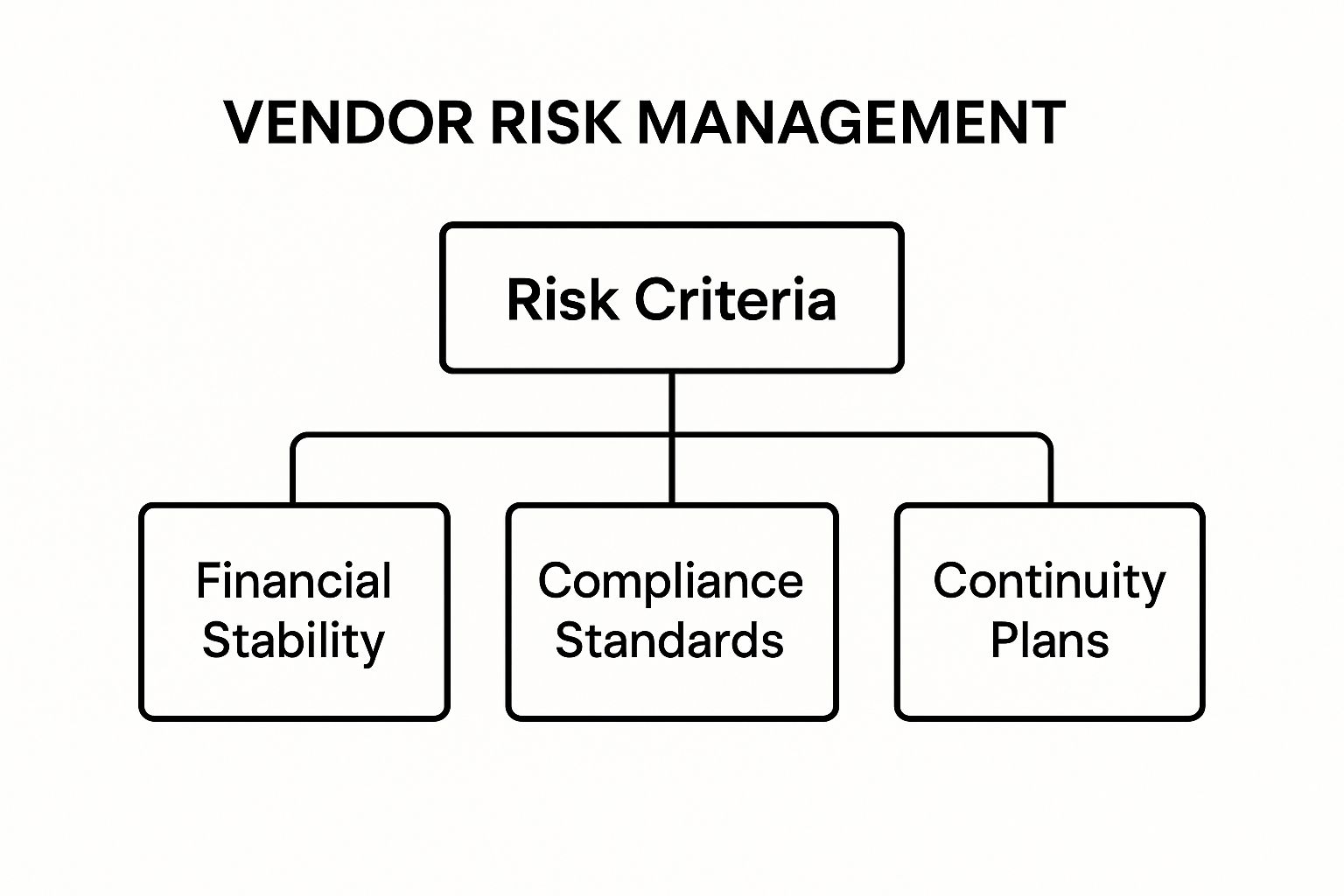
A robust due diligence process examines multiple facets of a potential partner’s business. It moves beyond a simple price comparison to create a holistic risk profile. Key areas of investigation include:


  • Financial Stability: Assessing a vendor's financial health to ensure they can meet their obligations and won't face insolvency during a critical project.

  • Compliance and Security: Verifying adherence to industry regulations (like GDPR or HIPAA) and evaluating their cybersecurity protocols to protect sensitive data.

  • Operational Capability: Ensuring the vendor has the resources, processes, and business continuity plans to deliver services without interruption.


This structured hierarchy helps organize your risk assessment, allowing you to prioritize the most critical areas for your business.


As the infographic illustrates, core risk criteria branch into distinct categories, each requiring focused evaluation before and during a vendor partnership.


Actionable Implementation Tips


To put this into practice, develop a tiered due diligence framework. Assign a criticality score to each vendor based on their importance to your operations and the sensitivity of the data they handle. A high-risk vendor, such as a cloud infrastructure provider, should undergo a rigorous assessment, while a low-risk office supply vendor requires a much simpler check.


As environmental concerns and regulatory pressures increase, assessing and managing the environmental impact of your vendors is becoming a critical component of due diligence. You can leverage specific tools for tracking Scope 3 supplier emissions to integrate sustainability metrics into your risk profiles, ensuring your supply chain aligns with corporate responsibility goals. This proactive approach not only mitigates risk but also strengthens your brand's reputation.


2. Strategic Vendor Segmentation and Portfolio Management


Not all vendors are created equal, and treating them with the same level of attention is inefficient and ineffective. Strategic vendor segmentation involves categorizing suppliers based on their importance, risk, and value to your organization. This data-driven approach allows you to tailor management strategies, optimize resource allocation, and focus on building deep partnerships where they matter most.


As shown in the graphic, vendors can be plotted on a matrix, such as the Kraljic Matrix, to define specific relationship management approaches for each quadrant.


Core Pillars of Vendor Segmentation


A robust segmentation model typically evaluates vendors against two primary axes: business impact and supply market complexity. This creates a clear framework for categorization.


  • Strategic Partners: High-impact, high-complexity vendors critical to your competitive advantage. These relationships require collaborative innovation and executive-level engagement.

  • Leverage Suppliers: High-impact, low-complexity vendors in competitive markets. Management should focus on optimizing costs through competitive bidding and negotiation.

  • Bottleneck Suppliers: Low-impact, high-complexity vendors where supply continuity is the main concern. The goal is to ensure a stable supply and explore alternatives.

  • Transactional Suppliers: Low-impact, low-complexity vendors. Management should focus on process automation and efficiency to minimize administrative overhead.


This structured categorization is a cornerstone of effective vendor management best practices, ensuring your efforts are proportional to the value and risk each vendor represents.


Actionable Implementation Tips


To implement this, start by defining clear segmentation criteria that align with your business priorities, such as spend volume, risk profile, and strategic importance. Use data analytics to group your vendors into defined segments like those used by Procter & Gamble, which tiers suppliers to focus intensive resources on its top 300 strategic partners.


Develop a distinct management "playbook" for each segment outlining communication frequency, performance metrics, and relationship goals. It's crucial to communicate this segmentation strategy clearly to internal stakeholders to ensure consistent application. Finally, review and update your segmentation criteria and vendor classifications annually to reflect changes in your business strategy and market dynamics.


3. Performance Management and Scorecarding Systems


Beyond initial vetting, one of the most critical vendor management best practices is the ongoing, objective measurement of partner performance. A systematic scorecarding framework moves evaluations from subjective feelings to data-driven insights, ensuring vendors are consistently meeting or exceeding contractual obligations. This approach provides a clear, standardized method for tracking performance, facilitating productive conversations, and fostering a culture of continuous improvement.


As shown above, a balanced scorecard approach aggregates multiple data points, transforming complex vendor activities into a clear, actionable performance overview.


Core Pillars of Vendor Scorecarding


An effective scorecarding system provides a holistic view by balancing different types of metrics. Relying on a single metric can create skewed incentives, so a comprehensive evaluation should include:


  • Quality Metrics: Measuring defect rates, adherence to specifications, and overall product or service excellence.

  • Delivery and Timeliness: Tracking on-time delivery rates, lead time accuracy, and order fulfillment speed.

  • Cost and Financial Performance: Assessing price competitiveness, invoice accuracy, and total cost of ownership against the agreed-upon budget.

  • Service and Responsiveness: Evaluating communication effectiveness, problem resolution speed, and overall customer service quality.


This multi-faceted approach, similar to the Balanced Scorecard framework popularized by Robert Kaplan and David Norton, ensures you are evaluating the complete value a vendor provides.


Actionable Implementation Tips


To implement this practice, start by defining a clear set of Key Performance Indicators (KPIs) for each vendor segment. For example, the KPIs for a critical software provider will differ significantly from those for a logistics partner. Set realistic but challenging targets for each KPI and establish a regular review cadence, such as quarterly business reviews, to discuss performance.


Crucially, you must link scorecard results to tangible business consequences. High-performing vendors could be rewarded with increased business volume or longer contract terms, while underperforming partners might be placed on a formal performance improvement plan. Using a dedicated vendor management platform can help automate data collection and provide real-time dashboards, making performance tracking more efficient and transparent for all stakeholders.


4. Comprehensive Contract Management and Governance


Effective vendor management best practices hinge on a structured approach to the legal agreements that define your partnerships. Comprehensive contract management and governance is the end-to-end oversight of vendor contracts, from creation and negotiation through to renewal or termination. This discipline ensures legal protection, cost optimization, and adherence to agreed-upon service levels.


Core Pillars of Contract Governance


A robust contract management framework standardizes processes and creates a single source of truth for all vendor agreements. It moves beyond simple storage to active lifecycle management, ensuring no obligation or opportunity is missed. Key areas of focus include:


  • Standardization and Creation: Developing templates and master service agreements (MSAs) to ensure consistency and include critical legal protections.

  • Performance and Compliance: Actively tracking vendor performance against Service Level Agreements (SLAs) and ensuring compliance with all contractual terms.

  • Lifecycle Management: Systematically managing key dates for renewals, terminations, and price adjustments to avoid automatic renewals of unfavorable terms.


This structured approach transforms contracts from static documents into dynamic tools for driving value and mitigating risk.


Actionable Implementation Tips


To implement strong contract governance, start by creating a centralized digital repository for all vendor agreements. This eliminates scattered files and provides a searchable database. For instance, companies like General Motors use sophisticated supplier contract systems to manage thousands of agreements for automotive components, ensuring quality and delivery terms are met.


Establish regular contract review cycles with key stakeholders to assess performance, identify areas for improvement, and prepare for negotiations. Using electronic signature and approval workflows accelerates the process and maintains a clear audit trail. Including clear termination and transition clauses from the outset is a critical step that protects your organization by defining a clear exit strategy should the partnership end.


5. Financial Management and Cost Optimization


Effective vendor management best practices extend deep into financial strategy, moving beyond simply negotiating the lowest price. This involves a disciplined approach to managing vendor-related costs, optimizing payment processes, and analyzing the total cost of ownership (TCO) to maximize value. It’s about building a financially sustainable supply chain that balances cost savings with service quality and risk mitigation.


Core Pillars of Vendor Financial Management


A structured approach to vendor finances ensures every dollar spent contributes directly to business goals. It creates a clear framework for cost control and value generation. Key areas of focus include:


  • Spend Analysis and Visibility: Systematically tracking and categorizing all vendor-related expenditures to identify patterns, consolidation opportunities, and areas of overspending.

  • Total Cost of Ownership (TCO): Evaluating not just the purchase price but also associated costs like maintenance, training, and operational impact to make more informed sourcing decisions.

  • Payment Optimization: Strategically managing payment terms, such as negotiating early payment discounts, to improve cash flow and reduce overall expenses.


This strategic hierarchy ensures financial decisions are data-driven, shifting the focus from short-term price cuts to long-term value creation and cost efficiency.


Actionable Implementation Tips


To implement robust financial oversight, integrate spend analytics tools to gain clear visibility into your procurement landscape. Use this data to consolidate purchases with fewer, high-performing vendors, leveraging volume to negotiate better pricing. A prime example is Apple's meticulous financial management with its component suppliers, where it optimizes costs without sacrificing quality.


Furthermore, introduce "should-cost modeling" for significant purchases. This involves creating an independent estimate of a product or service's cost, providing a powerful baseline for negotiations. Pair this with establishing shared savings programs where both you and your vendor benefit from identified cost reductions, fostering a collaborative and financially aligned partnership.


6. Communication and Relationship Building


Effective vendor management best practices extend beyond contracts and performance metrics to cultivate strong, collaborative partnerships. A systematic approach to communication and relationship building transforms a transactional buyer-supplier dynamic into a strategic alliance. This practice focuses on establishing mutual trust, transparency, and shared goals, which fosters innovation and long-term value for both parties.


Core Pillars of Vendor Relationships


Building a strong partnership requires a structured, intentional effort rather than relying on ad-hoc interactions. This approach creates a resilient and adaptive supply chain where vendors feel valued and are motivated to contribute beyond their contractual obligations. Key pillars include:


  • Structured Communication: Establishing a predictable cadence for meetings, reviews, and updates to ensure consistent alignment.

  • Strategic Alignment: Developing joint business plans with key vendors to align on long-term objectives and innovation roadmaps.

  • Mutual Investment: Fostering a two-way street where both organizations invest time and resources into understanding each other's needs and challenges.


This framework shifts the focus from cost-cutting to value creation, turning vendors into integral partners in your success.


Actionable Implementation Tips


To put this into practice, create a tiered communication plan. Strategic partners, like Nike's manufacturing collaborators for product development, require frequent, high-level engagement. In contrast, transactional suppliers may need only regular operational check-ins. Establish clear channels and points of contact to streamline interactions and prevent misunderstandings.


For a deeper dive into fostering productive dialogue, you can explore ways to improve communication at work for team success, as many of the same principles apply to external partnerships. Implementing a vendor recognition program or hosting joint innovation workshops can also significantly strengthen relationships, creating a culture where partners are actively engaged in helping you achieve your business goals.


7. Technology Integration and Digital Enablement


In today's fast-paced business environment, manual vendor management processes are a significant liability. Embracing technology to automate workflows, enhance visibility, and enable data-driven decisions is one of the most impactful vendor management best practices. This involves moving beyond spreadsheets and email chains to dedicated platforms that centralize communication, track performance, and manage risk in a cohesive digital ecosystem.


Core Pillars of Digital Vendor Management


A strategic approach to technology integration focuses on creating a seamless flow of information and automating routine tasks. This frees up your team to manage relationships and address strategic challenges rather than getting bogged down in administrative work. Key areas for technology adoption include:


  • Vendor Management Systems (VMS): Centralized platforms for onboarding, contract management, performance tracking, and payment processing.

  • Analytics and Reporting Tools: Dashboards that provide real-time insights into vendor performance, spending, and risk metrics.

  • Integration Platforms: Technology that connects your VMS with other essential business systems like ERPs and accounting software.


This digital framework provides a single source of truth, eliminating data silos and improving decision-making accuracy across the entire vendor lifecycle.


Actionable Implementation Tips


To effectively integrate technology, begin with a focused pilot program for a specific vendor category before a full-scale rollout. This allows you to identify and resolve issues on a smaller scale. Ensure any new platform can integrate with your existing systems to avoid creating more fragmentation. For instance, connecting your VMS to your financial software automates the procure-to-pay cycle, reducing errors and saving time.


Effective systems integration is key to unlocking automation benefits, so prioritize solutions with robust API capabilities. Finally, provide comprehensive training and change management support to ensure user adoption and establish clear data governance protocols to maintain the integrity of your vendor information from day one.


8. Compliance and Regulatory Management


Navigating the complex web of laws, industry standards, and internal policies is a non-negotiable aspect of modern vendor management best practices. Effective compliance management involves systematically monitoring, auditing, and enforcing these rules to protect your organization from legal penalties, reputational harm, and operational disruptions. This practice is especially critical in highly regulated sectors where a vendor’s non-compliance can have severe consequences for your business.


Core Pillars of Vendor Compliance


A structured compliance framework ensures that all vendor activities align with legal and ethical obligations. It moves beyond a simple contractual clause to active, ongoing oversight. Key areas of focus include:


  • Legal and Regulatory Adherence: Verifying that vendors comply with all applicable laws such as SOX for financial services, HIPAA for healthcare, or GDPR for data privacy.

  • Industry-Specific Standards: Ensuring vendors meet standards set by industry bodies, such as PCI DSS for payment card processing or ISO certifications for quality management.

  • Internal Policy Enforcement: Confirming that vendor operations align with your company’s own internal codes of conduct, security protocols, and ethical sourcing policies.


This layered approach helps create a comprehensive compliance shield, protecting your organization from risks introduced through your supply chain.


Actionable Implementation Tips


To embed this practice, start by creating a regulatory requirements matrix that maps each vendor to the specific regulations they must follow. Implement a risk-based monitoring schedule, where high-risk vendors (e.g., those handling sensitive data) are audited more frequently than low-risk ones.


Establish clear escalation paths for any identified compliance issues to ensure they are addressed swiftly and effectively. Regular training for your vendor management teams is also essential to keep them updated on evolving regulations. This proactive management of vendor compliance is a cornerstone of a mature and resilient vendor management program, safeguarding your organization's integrity and legal standing.


9. Continuous Improvement and Innovation Management


Effective vendor management best practices extend beyond monitoring current performance; they involve actively fostering a culture of perpetual growth and innovation. This strategic approach transforms the vendor relationship from a transactional one into a collaborative partnership focused on mutual value creation. It involves systematically identifying opportunities for improvement in processes, efficiency, and capabilities, ensuring the partnership evolves to meet future challenges.


Core Pillars of Collaborative Growth


A forward-thinking vendor strategy is built on two interconnected pillars: continuous improvement and joint innovation. This framework ensures that both parties are aligned on long-term goals and are actively working to enhance outcomes. Key areas of focus include:


  • Process Optimization: Jointly analyzing workflows to eliminate waste, reduce costs, and improve service delivery, often borrowing principles from Lean and Six Sigma methodologies.

  • Capability Development: Investing in vendor training and technology upgrades to enhance their ability to meet your evolving needs and industry standards.

  • Joint Innovation: Creating structured programs, like innovation challenges or idea-sharing platforms, to co-develop new products, services, or solutions.


This approach ensures that your vendor ecosystem doesn't just meet current requirements but becomes a strategic asset for future growth, as seen in Toyota's renowned supplier development programs.


Actionable Implementation Tips


To embed this practice, establish joint improvement goals with your most strategic vendors, supported by shared metrics and regular review sessions. Create a formal process for submitting and evaluating new ideas, ensuring that innovation is not left to chance. Pilot programs are an excellent way to test new approaches on a small scale before a full rollout, minimizing risk while encouraging experimentation.


To structure these efforts effectively, consider developing a formal process improvement plan. This document can serve as a roadmap for identifying inefficiencies and implementing changes. You can create a comprehensive roadmap by following a process improvement plan template that guides you through defining objectives, assigning responsibilities, and tracking progress. This structured approach helps turn abstract goals into tangible, measurable results.


Vendor Management Best Practices Comparison


Item

Implementation Complexity 🔄

Resource Requirements ⚡

Expected Outcomes 📊

Ideal Use Cases 💡

Key Advantages ⭐

Vendor Risk Management and Due Diligence

High - comprehensive evaluations and ongoing monitoring

High - expertise, tools, and time intensive

Reduced risks, compliance, informed decisions

High-risk industries, critical vendor relationships

Strong risk mitigation, regulatory compliance

Strategic Vendor Segmentation and Portfolio Management

Medium to high - data analytics and ongoing updates

Medium - analytical capabilities and data maintenance

Optimized resource allocation, tailored strategies

Large vendor portfolios needing prioritization

Focused management, improved negotiation leverage

Performance Management and Scorecarding Systems

Medium - requires standardized metrics and reviews

Medium - regular assessments and data tracking

Continuous improvement, accountability

Vendor performance tracking and contract renewals

Objective evaluation, transparency

Comprehensive Contract Management and Governance

High - legal, procurement expertise plus tech systems

High - legal support and contract management tools

Legal protection, cost control, SLA enforcement

Contract-heavy environments with complex agreements

Reduced legal risks, streamlined contracts

Financial Management and Cost Optimization

Medium - financial analysis and process changes

Medium to high - financial expertise and analytics

Cost reduction, financial visibility

Organizations focused on spend control and budgeting

Sustainable cost savings, better cash flow

Communication and Relationship Building

Medium - ongoing engagement and joint activities

Medium to high - time and resource intensive

Strong partnerships, innovation access

Strategic partnerships, long-term collaboration

Improved responsiveness, competitive advantages

Technology Integration and Digital Enablement

High - tech investment, integration complexity

High - technology platforms and user training

Increased efficiency, data-driven decisions

Organizations adopting digital transformation

Automation, real-time insights

Compliance and Regulatory Management

High - continuous monitoring and auditing

High - expertise and compliance tools

Reduced legal risks, maintained certifications

Regulated industries requiring strict adherence

Risk reduction, stakeholder trust

Continuous Improvement and Innovation Management

Medium to high - ongoing initiatives and culture change

Medium to high - training, collaboration efforts

Sustainable performance gains, innovation

Organizations aiming for vendor capability growth

Long-term improvement, competitive edge


Build Your Vendor Management Advantage with Automation


Transitioning from a reactive to a strategic vendor management function requires more than just a checklist; it demands a fundamental shift in operational philosophy. Throughout this guide, we've explored the critical pillars of effective vendor partnerships, from rigorous risk management and strategic segmentation to the nuances of contract governance and fostering collaborative innovation. Each of these vendor management best practices represents a lever you can pull to extract more value, mitigate risk, and build a resilient supply chain that fuels your organization's growth.


The common thread weaving through these disparate practices is the need for consistency, visibility, and data-driven decision-making. Manually managing vendor scorecards, tracking contract milestones across spreadsheets, and conducting ad-hoc compliance checks is not only inefficient but also unsustainable as your vendor ecosystem expands. This is where the true competitive advantage lies: in moving beyond theory and embedding these best practices into your daily operations through intelligent automation.


From Manual Effort to Automated Excellence


Imagine a system where a new vendor's due diligence process is automatically triggered in your CRM, assigning tasks and collecting necessary documentation without a single manual email. Picture a dashboard that aggregates real-time performance data from various systems, automatically flagging underperforming suppliers based on your predefined KPIs. This isn't a futuristic ideal; it's the tangible outcome of leveraging modern automation platforms.


By automating the tactical and repetitive aspects of vendor management, you empower your team to focus on high-value strategic activities. Instead of chasing invoices or manually updating risk profiles, they can dedicate their time to:


  • Strengthening Strategic Relationships: Focusing on collaborative planning and joint innovation with your most critical partners.

  • Analyzing Performance Trends: Moving beyond simple data collection to uncovering insights that drive continuous improvement and cost optimization.

  • Proactive Risk Mitigation: Identifying potential disruptions and developing contingency plans before they impact your operations.


Unlocking Your Strategic Potential


Ultimately, adopting these vendor management best practices is about transforming your supplier network from a simple cost center into a powerful engine for innovation and strategic advantage. The principles of clear communication, robust performance tracking, and diligent contract oversight are the blueprints for success. However, automation is the machinery that brings those blueprints to life, ensuring precision, efficiency, and scalability. By strategically implementing automated workflows, you create a seamless, transparent, and responsive vendor management framework that not only supports but actively accelerates your business objectives.


Ready to transform your vendor management processes from a manual burden into an automated, strategic asset? The experts at Flow Genius specialize in designing and implementing custom automation workflows that connect your tools, streamline your processes, and give you back your most valuable resource: time. Visit Flow Genius to discover how you can embed these best practices directly into your operations and build a world-class vendor management system.


bottom of page